
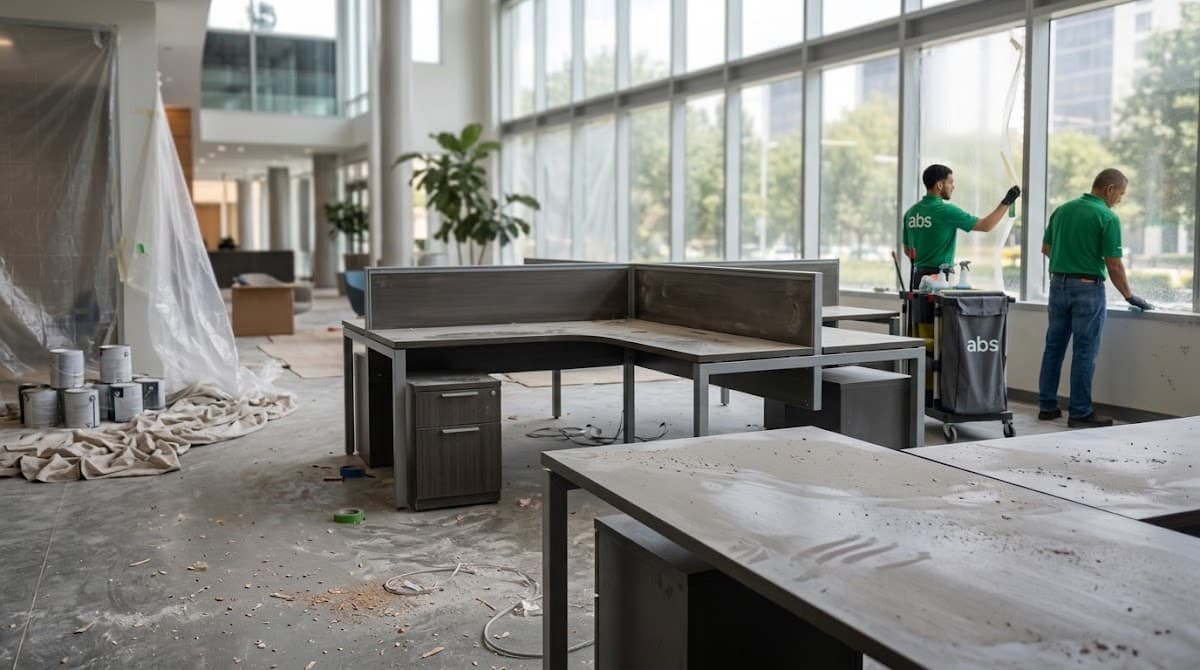
Most property managers underestimate how much dust settles after a construction project. Drywall particles infiltrate HVAC systems, coat light fixtures, and embed into carpet fibers. Without a phased cleaning process, you end up wiping the same areas twice.
This checklist for commercial spaces walks you through all three phases, from rough removal to final polish.
Key Takeaways
Post-construction cleaning follows three phases: rough, light, and final.
Construction particles resettle after each pass and require filtered equipment for proper capture.
A room-by-room checklist prevents missed areas during commercial post-construction cleaning.
OSHA requires job sites to remain free of hazards during and after cleanup tasks.
Professional crews reduce punch list items and protect new finishes from damage.
Scheduling the final pass the day before walkthrough produces the best results.
What Is Post Construction Cleaning?
Post construction cleaning is the debris removal process applied to a newly built or remodeled space after trades finish their work. It goes beyond standard janitorial work. Fine dust from drywall, concrete, and wood scraps is harder to remove than everyday dirt and prone to resettling through air movement and foot traffic.
Commercial facilities face higher standards than homes. Tenants notice grit on baseboard trim, smudge marks on glass surfaces, and haze on tile. A post-construction cleaning plan addresses each issue through a phased approach that works top to bottom, from heavy clearing to fixture polishing.
The 3 Phases of a Post-Construction Cleaning Checklist
Every project generates different levels of mess, but the cleaning process follows the same three-phase structure. Smaller projects may compress these into a single day. Large buildouts require separate crews for each phase.
Printable Checklist
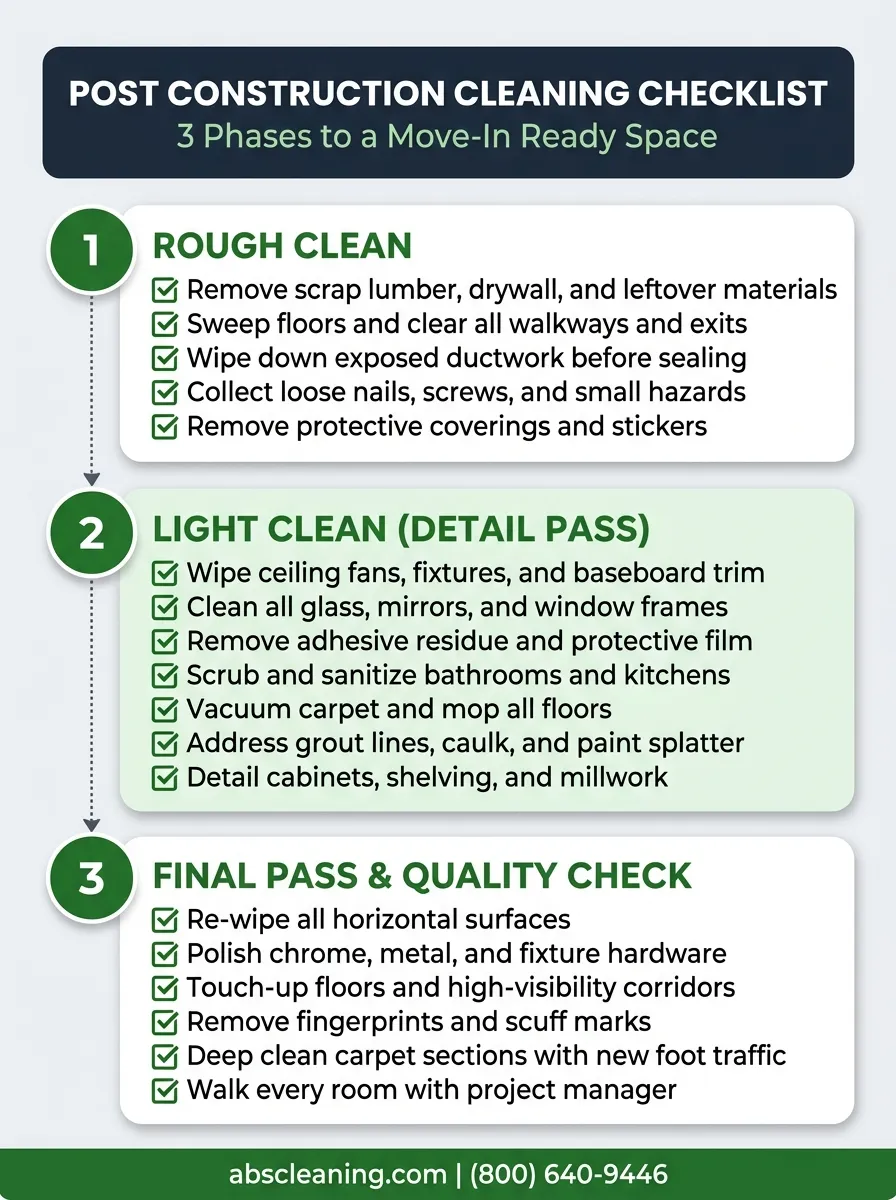
Phase 1: Rough Clean
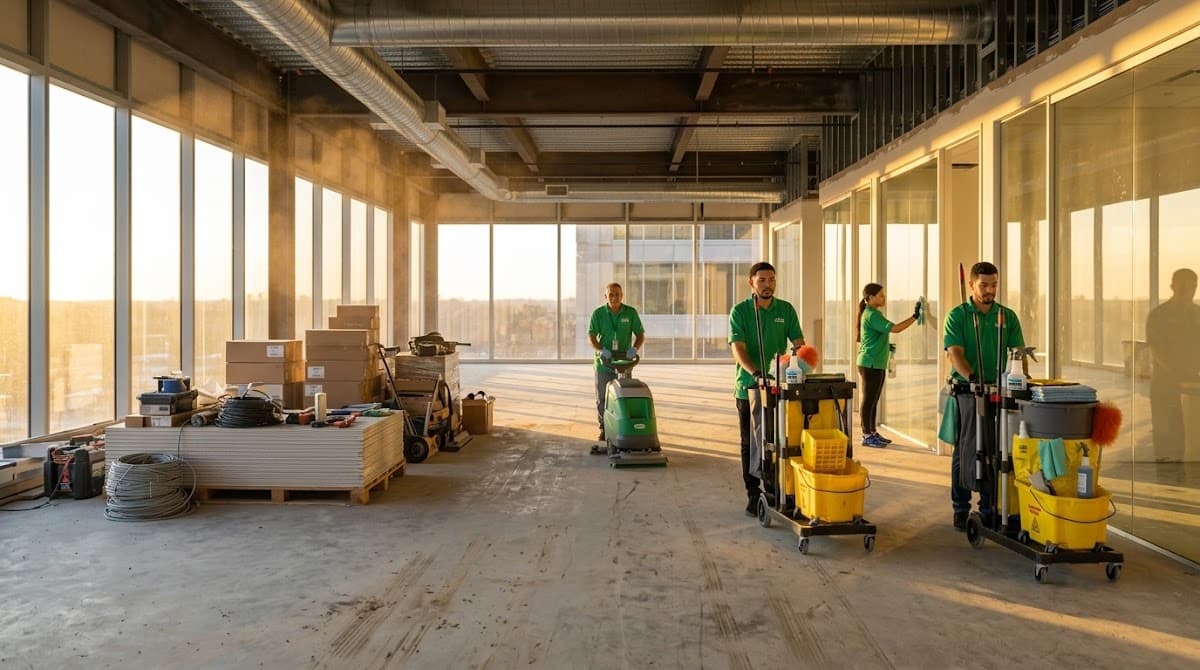
This first phase begins while construction crews are still wrapping up. The goal is to clear large debris, packaging, and bulk buildup so trades can finish punch list work safely.
Remove scrap lumber, drywall scraps, and leftover materials
Sweep floors and clear walkways, stairwells, and fire exits
Wipe down exposed ductwork before it gets sealed
Collect loose nails, screws, and small hazards
Remove protective coverings and stickers where appropriate
OSHA housekeeping standards require construction sites to remain hazard-free during and after the build, making a thorough first pass a compliance issue.
Phase 2: Light Clean (Detail Pass)
The light clean is the most labor-intensive phase. Despite the name, this stage involves thorough attention to every wall, floor, and built-in element after trim and installations are complete.
Wipe ceiling fans, fixtures, switch plates, and baseboard trim
Clean interior glass, mirrors, and window frames
Remove adhesive residue, labels, and protective film from hard surfaces
Scrub and sanitize bathroom areas, countertops, and kitchen spaces
Vacuum carpet and mop floors using filtered equipment
Address grout lines, caulk, and paint splatter on finished surfaces
Detail cabinets, shelving, and millwork inside and out
Use microfiber cloths for delicate finishes. Work from top down so particles fall onto uncleaned areas below. Open windows when possible to improve indoor air quality and speed drying.
Phase 3: Final Pass & Quality Check
Dust resettles overnight, even after a thorough detail pass. The final phase catches everything the previous stage stirred up and prepares your space for walkthrough.
Re-wipe all horizontal areas where particles have settled
Polish chrome, metal, and visible fixture hardware
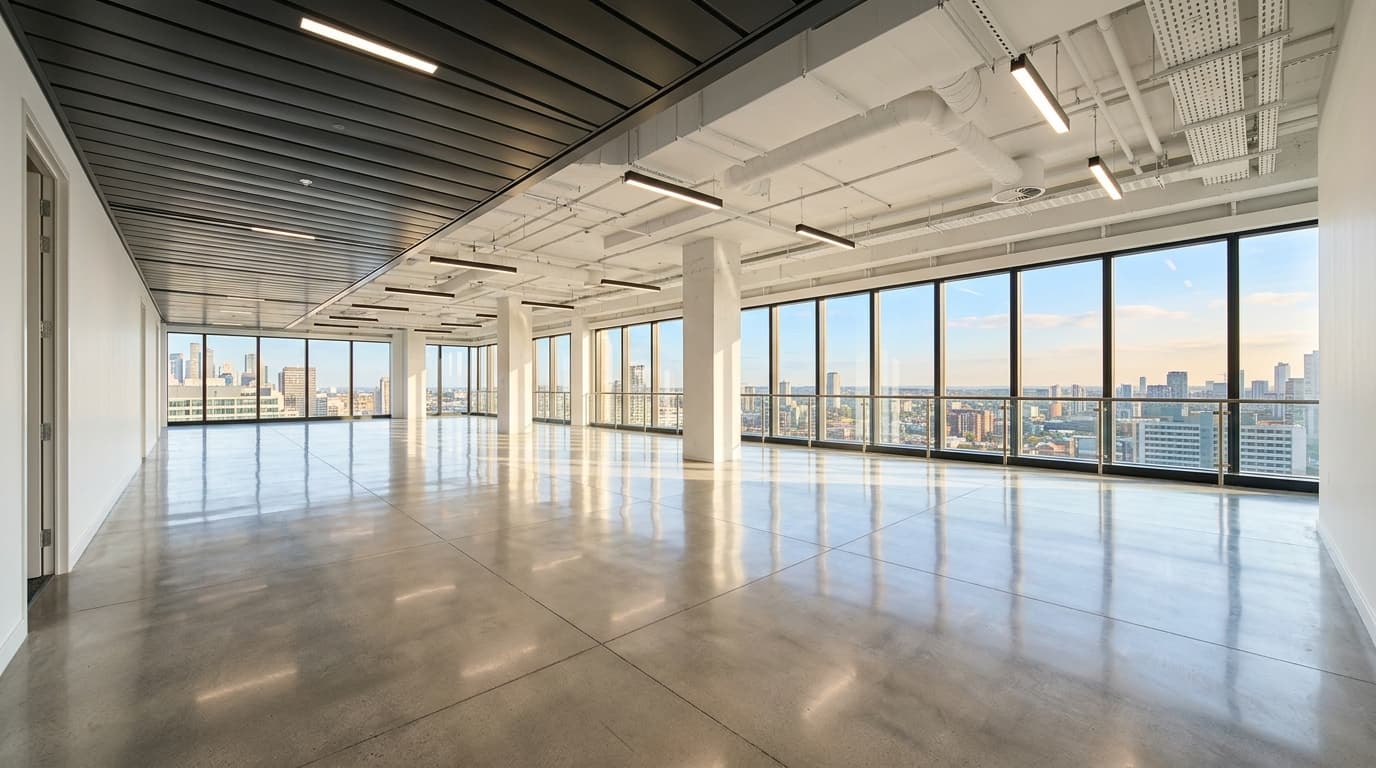
Touch-up floors, entryways, and high-visibility corridors
Remove fingerprints and scuff marks from doors and frames
Spot-check kitchens and bathrooms for missed buildup
Deep clean carpet sections that saw foot traffic after Phase 2
Inspect every room with the project manager to confirm completion
Schedule this phase the day before the owner's walkthrough. The tighter the window between your last pass and the handoff, the better your results.
Room-by-Room Checklist
| Area | Cleanup Tasks |
|---|---|
| Clear all construction waste, sweep and mop floors, dust walls and trim, clean door frames and outlets | General Areas |
| Sanitize toilets, sinks, and showers, polish chrome, scrub tile joints, remove excess caulk | Bathrooms |
| Disinfect counters and backsplashes, wipe appliances inside and out, mop flooring | Kitchens & Break Rooms |
| Wash all panes inside and out, remove tape and sticker film, wipe sills and ledges | Windows & Glass |
| Wipe interior and exterior surfaces, clear every crevice, clean shelves and rods | Cabinets & Closets |
| Vacuum covers and returns, replace filters, check air quality post-cleaning | HVAC & Ducts |
| Pressure wash sidewalks and entryways, clean exterior windows, clear landscaping of debris, scrub driveway stains | Exterior |
Equipment You Need
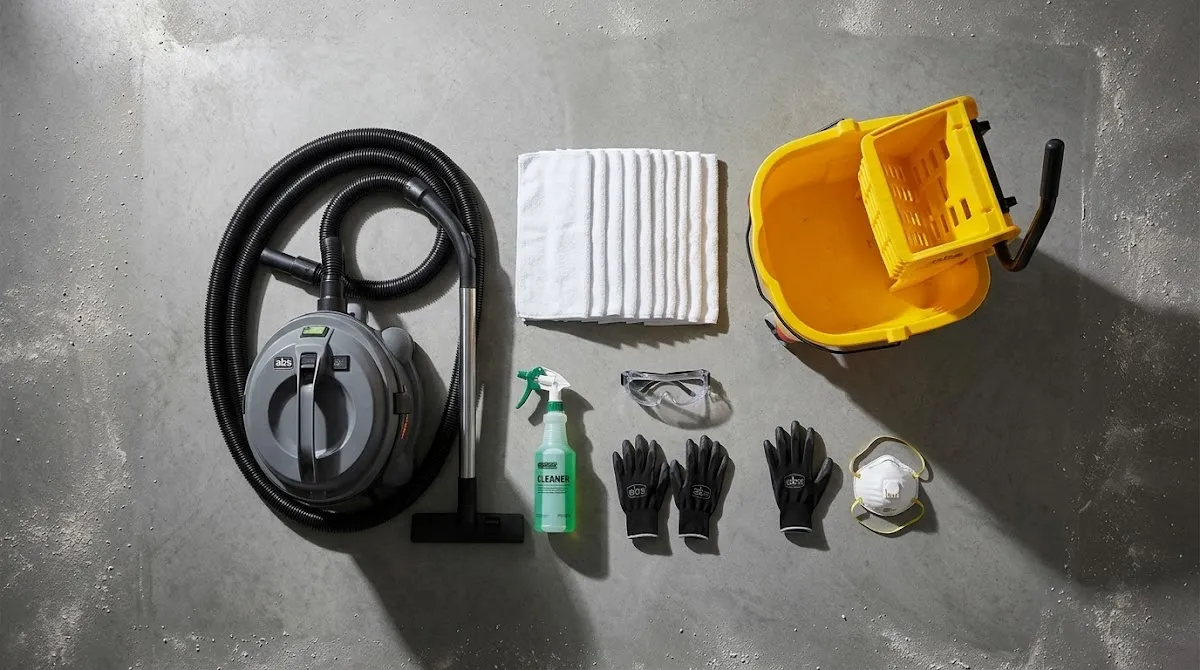
The right tools prevent damage to new finishes and reduce the number of passes required. Standard janitorial gear is not enough for construction dust control.
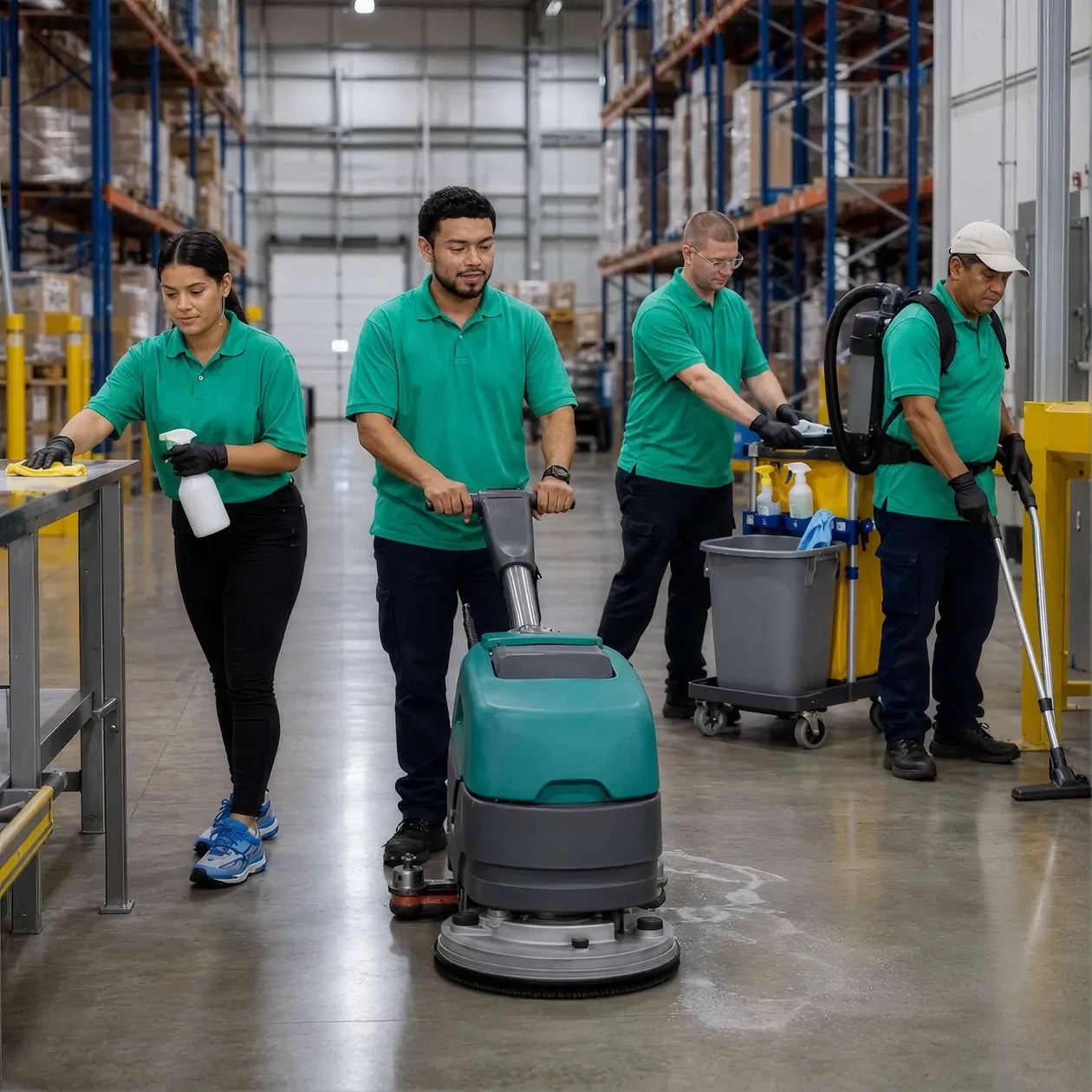
HEPA vacuums: Capture particles that standard units push back into the air
Microfiber mops: Trap buildup on contact rather than spreading it across surfaces
Floor scrubbers: Restore hard flooring after heavy foot traffic
Residue removers: Safe for new finishes, effective on adhesive and paint
PPE: Gloves, masks, and safety goggles for airborne particle and chemical exposure
Heavy-duty trash bags: For construction waste and recyclable materials
Harsh chemicals damage new finishes, and abrasive tools risk scratching glass or stone. Match every product to the surface type.
Common Post-Construction Cleanup Mistakes
Skipping the first phase: Leftover debris grinds into new flooring and multiplies punch list items.
Wet wiping before dry dust removal: Moisture turns particles into harder-to-remove grime on every surface.
Using standard equipment: Without a HEPA filter, airborne dust resettles within hours.
Working bottom to top: Always start at the top and work down.
Timing the final pass too early: Trades coming through afterward leave new scuff marks and fingerprints.
Ignoring ductwork: Dust circulates through HVAC systems for weeks if covers are not wiped and filters replaced.
ABS Post-Construction Cleaning Across Texas
ABS Commercial Cleaning provides post-construction clean-up in Houston, San Antonio, Austin, Dallas, and Fort Worth. We assign dedicated crews trained in phased construction site work to every project.
Our approach starts with a site walkthrough to assess conditions and your timeline. We build a plan around your schedule, not a generic template. Every team member is background-checked, and we carry full insurance.
Whether your project is an office remodel, a warehouse buildout, or a ground-up build, we coordinate around your punch list and move-in date. Call (737) 289-0337 or request a quote to get your newly built or renovated space tidy, hygienic, and ready for occupancy.
Frequently Asked Questions About Post-Construction Cleaning
What Are the Three Stages of Post-Construction Cleaning?
The three stages are the rough phase, the light (detail) phase, and the final phase. The first stage removes debris and bulk buildup. The second addresses every surface, vent, fixture, and floor area with a vacuum and detail pass. The third catches resettled particles and prepares the space for occupancy or a welcoming environment for tenants.
What Do I Need for Post-Construction Cleaning?
A proper job requires vacuum equipment with proper filtration, detail tools, floor scrubbers, glass cleaner, heavy-duty trash bags, and personal protective gear. Commercial spaces also need adhesive removal solutions and a polishing system for chrome hardware.
What Are Common Post-Construction Cleaning Mistakes?
Wet wiping before dry removal, using unfiltered equipment, and working bottom to top are the most frequent errors. Each leads to resettled particles, surface damage, or a failed walkthrough.
What Is the 6 10 Cleaning Rule?
The 6 10 rule means standing 6 feet from a surface and checking from 10 different angles to verify it is free from construction residue and smudge marks. This method catches marks invisible at direct eye level but obvious to someone walking through from multiple directions, helping meet safety standards and local regulations before handing off a dust-free space.