

A vague scope of work is the single biggest reason cleaning service relationships fail. Facilities that rely on handshake deals or generic descriptions end up with missed tasks, surprise charges, and no way to hold anyone accountable.
Our team has spent 20+ years of experience building plans that spell out exactly what gets cleaned, how often, and to what standard.
Key Takeaways
A detailed scope of work prevents 10 to 20 percent in annual cost overruns from change orders.
Every cleaning contract should outline specific areas, tasks, frequencies, and exclusions.
Insurance verification keeps your facility covered before any crew arrives on site.
A documented inspection process matters more than an exit clause for maintaining quality.
Standard agreements run two to three years with built-in review cycles.
Communication protocols and escalation procedures reduce disputes before they grow.
What Is a Commercial Cleaning Contract?
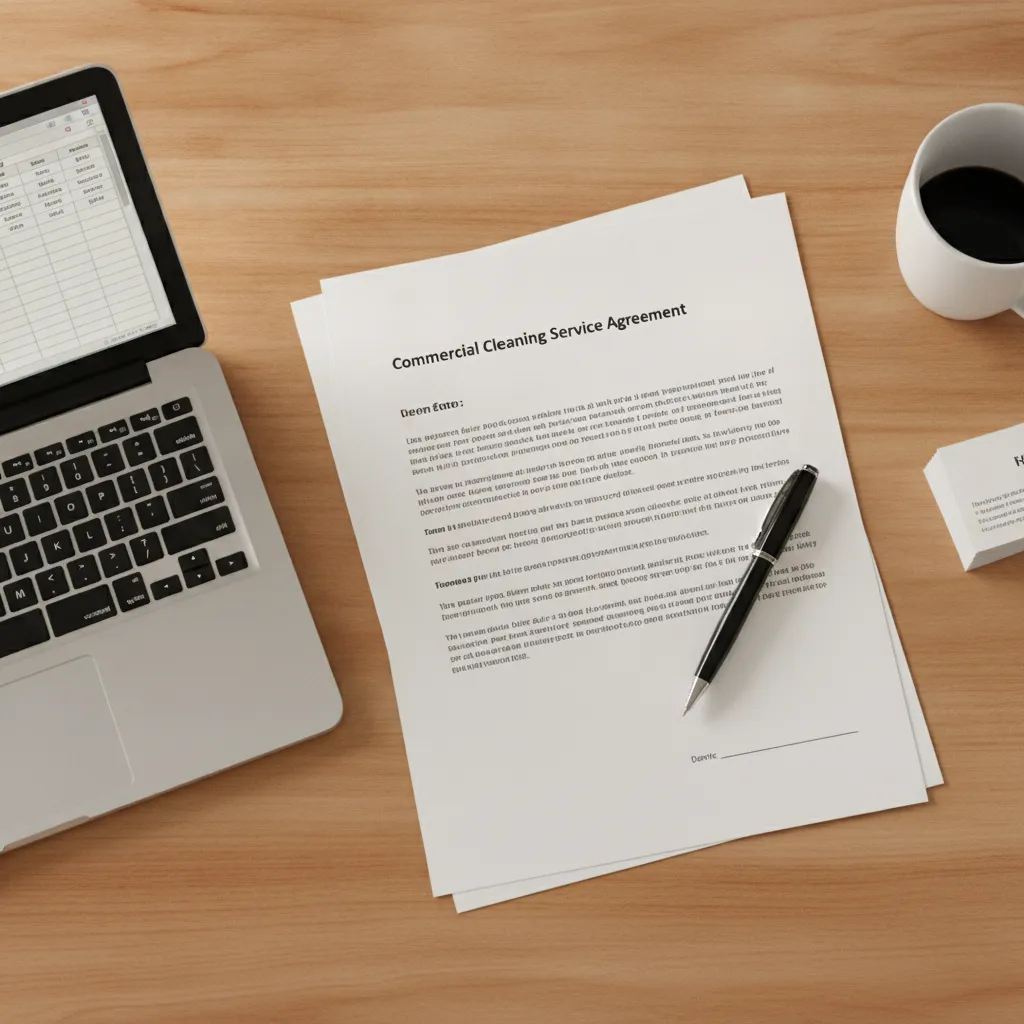
A commercial cleaning contract is a written agreement between a facility and a cleaning company that outlines the scope of service, schedule, cost structure, insurance, and responsibilities for both sides. It covers recurring janitorial services, specialty work like carpet cleaning or floor maintenance, and the terms that govern the relationship.
Without this document, both parties operate on assumptions. The cleaning provider delivers what they interpret as "clean." The facility manager expects what they assumed was included. According to Facility Executive, facilities spending $8,000 to $10,000 per month on cleaning services with nothing in writing is more common than most business owners realize.
A strong contract removes that ambiguity. It defines what clean means for your specific workplace, how performance will be measured, and what happens when standards slip.
What Should a Cleaning Contract Include?
Scope of Work and Cleaning Tasks
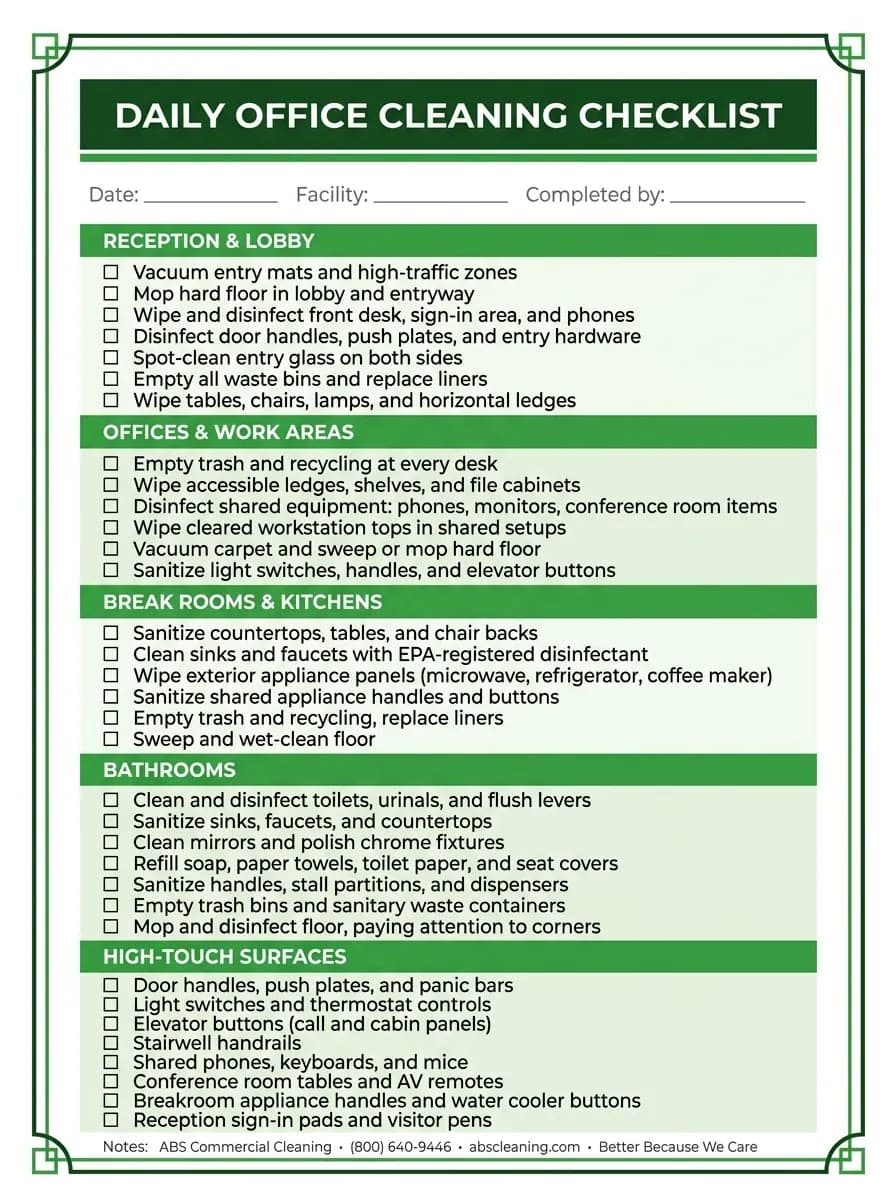
The scope of work is the foundation of every cleaning services contract. It should outline every area that will be serviced, every task within each area, the frequency of each task, and what is excluded.
A weak scope says "restrooms cleaned daily." A strong scope specifies restroom disinfection once per shift, sink and mirror cleaning, floor mopping with germicidal solution, waste removal, and restocking of paper products and soap. That level of detail prevents the disagreement that follows when expectations don't match the service delivered.
For facilities that need day porter coverage during business hours, the scope should note daytime cleaning tasks separately from after-hours janitorial services. For office cleaning, it should specify whether common areas, private offices, conference rooms, and breakrooms are all included, or if some areas carry a different schedule.
Include a full task list: vacuum, mop, wipe surfaces, trash removal, restroom sanitation, window service, and any periodic deep cleaning such as carpet extraction or floor stripping. Identify what is not covered. Exclusions matter just as much as inclusions for preventing scope creep.
Insurance, Liability & Compliance
Before any cleaning crew enters your building, verify three types of coverage:
| Insurance Type | What It Covers |
|---|---|
| General liability insurance | Bodily injury or property damage on your premises |
| Workers' compensation | The provider's team members if injured on your site |
| Janitorial bond | Theft by cleaning staff |
Ask for current certificates. Expired or missing coverage exposes your facility to financial and legal risk. Proper insurance protects both your business and the service provider.
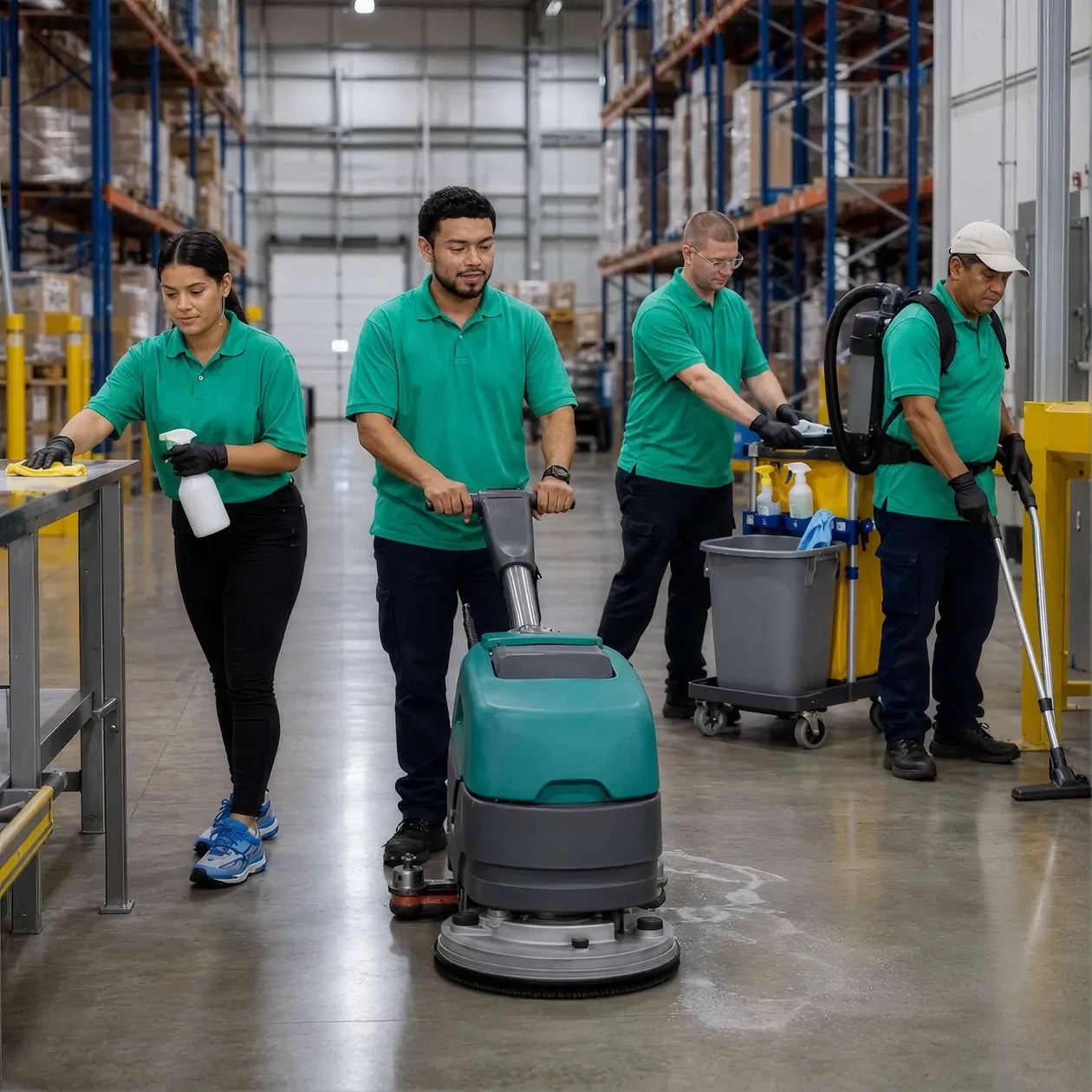
For medical offices and clinics, the agreement should also address compliance with infection control standards, use of EPA-registered disinfectants, and staff training for healthcare environments. Industrial and warehouse facilities may require OSHA-aligned safety protocols and equipment-safe cleaning procedures.
Confirm that all cleaning professionals hold the right credential for your facility type, are background-checked, and trained. Your janitorial services contract should require this as a standard obligation, not treat it as optional.
Cost, Payment Terms & Supply Responsibility
Transparent pricing and cost structures eliminate surprises. The agreement should clearly state:
The total monthly fee and payment schedule
Whether the service covers all cleaning supplies, equipment, and chemicals, or if you provide any of these
Fees for emergency requests, after-hours work, or one-time specialty jobs
Payment terms (Net 30, upon receipt, or another arrangement)
How rate adjustments work for multi-year contracts
Standard agreements run two to three years in the U.S., with renewal terms spelled out in advance. For longer commitments, include a provision for periodic cost reviews tied to labor or material changes.
Avoid providers who offer a single low number without breaking down what's included. That lack of clarity almost always leads to change orders, and those extra charges add up fast.
Communication, Reporting & Escalation
A services contract should name primary contacts on both sides for routine communication and urgent issues. It should also outline reporting requirements such as:
How service completion will be reported (written reports, digital logs, or site inspections)
How often performance reviews happen (monthly or quarterly)
An escalation procedure: what happens if an issue isn't resolved at the site level, who gets involved, and within what timeframe
A defined escalation process prevents small problems from becoming larger conflicts. Your provider should have 24 hours to correct a routine issue and four hours for anything in a client-facing area.
What to Avoid in a Cleaning Service Agreement
Not every contract covers your facility equally. Watch for these red flags:
Vague scope language. "General cleaning as required" tells you nothing. If the scope doesn't name specific areas, tasks, and frequencies, it will fail.
No inspection or accountability clause. Agreements that list tasks but include no verification mechanism leave you with no way to measure quality. A documented inspection process with scoring and correction windows matters more than a termination clause.
Lowest-cost-first thinking. Choosing a cleaning company based on the lowest bid routinely costs more over time. When scope clarity is sacrificed for a lower number, change orders fill the gap.
Missing insurance verification. Never sign with a provider who can't show current coverage for bodily injury, property damage, workers' compensation, and a janitorial bond.
No exit clause. Your agreement should include an exit provision with a 30 to 60 day notice period and defined grounds for immediate cancellation, such as safety violations.
Generic, one-size-fits-all language. A church with multi-use event spaces has different needs than a corporate office. An agreement that doesn't reflect your facility type is already failing.
How to Evaluate Cleaning Companies Before You Sign
Before committing to an agreement, ask each provider to walk through your facility in person. A walk-through reveals whether the company understands your space, your schedule, and your specific cleaning requirements.
During the evaluation, look for these indicators:
Do they ask detailed questions about your facility, or offer a generic quote?
Can they provide proof of current insurance, business licenses, and background checks on staff?
Do they provide cleaning services with their own supplies and equipment, or expect you to furnish them?
Will they assign dedicated crews to your facility, or rotate different team members weekly?
Do they use disinfection protocols appropriate for your facility type?
The cleaning companies that invest in their people tend to deliver the most consistent, high-quality results. At ABS, we pay above-average wages because better-paid team members show up prepared, stay longer, and care about the work.
Keep Your Cleaning Agreement Working Over Time
A contract that nobody updates stops working. Facilities change. Staff turns over. Service needs shift. Your agreement should include a built-in review cycle, ideally at 30, 60, and 90 days after launch, then quarterly.
Use these reviews to check inspection scores against agreed benchmarks, address any recurring issues, and adjust the scope as your facility's needs evolve. A good cleaning partnership adapts alongside your workplace rather than locking you into a static scope that no longer matches reality.

Let ABS Build a Service Plan Around Your Facility
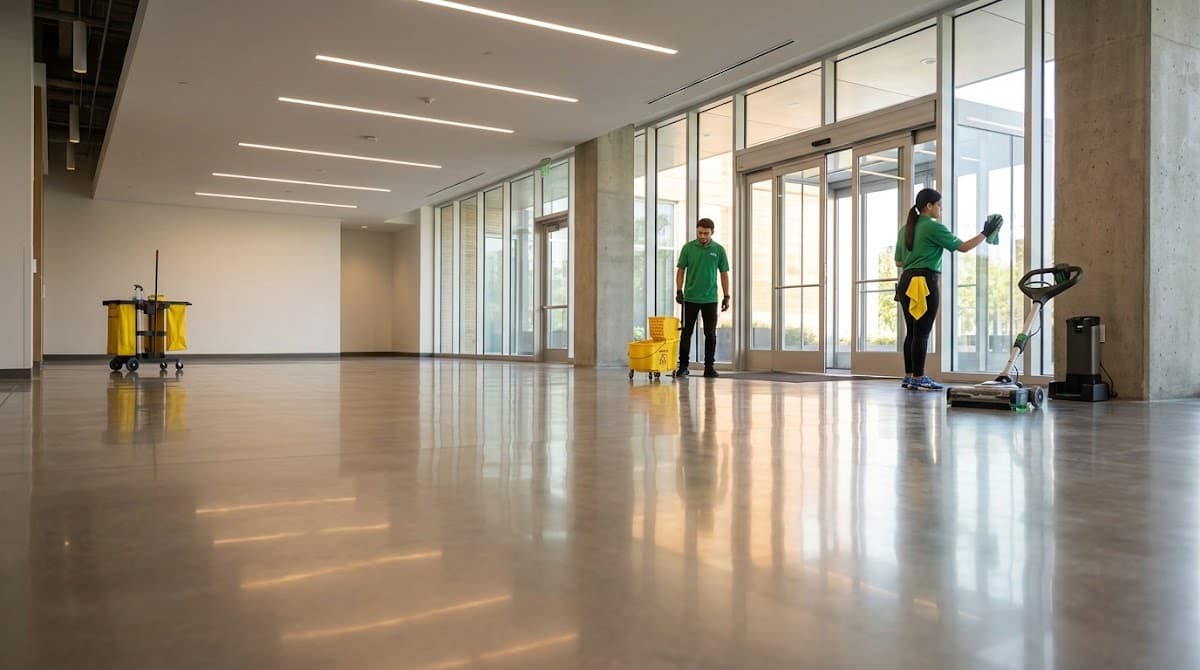
At ABS, we don't send a generic proposal. We walk through your facility, learn your schedule and compliance needs, and build a customized professional cleaning plan with a clear scope, transparent fees, and dedicated crews assigned to your building.
We provide commercial cleaning services for offices, medical facilities, churches, schools, warehouses, and more across five major Texas markets: Austin, Houston, San Antonio, Dallas, and Fort Worth. Every team member is background-checked, professionally trained, and supported with the tools and pay they need to deliver consistent results.
Ready to see what a real agreement looks like? Call (737) 289-0337 or request a free quote today. Schedule Your Service Today!
Frequently Asked Questions About Commercial Cleaning Contracts
What key terms should be included in a cleaning contract?
A cleaning contract should include the full scope of work with specific areas, tasks, and frequencies. It should also cover insurance requirements, payment terms, supply responsibility, communication protocols, exit provisions, and a documented inspection process with correction windows. Exclusions matter just as much as inclusions.
How long do commercial cleaning contracts usually last?
Standard agreements in the United States run two to three years. Shorter terms are available, and many service providers offer month-to-month options for facilities that prefer flexibility. Longer commitments often include provisions for periodic rate reviews.
What is a scope of work in a commercial cleaning contract?
A scope of work defines every area of your facility that will be cleaned, the specific tasks performed in each area, how often each task occurs, and what is excluded. A well-written scope prevents conflict by ensuring both the facility manager and the cleaning provider share the same expectations.
How do you hold a cleaning company accountable?
The most effective accountability tool is a documented inspection process written into the agreement. Supervisors score areas weekly against a defined checklist, and the provider has a set window to correct any issue, typically 24 hours for routine items and four hours for high-traffic or client-facing areas.
Should an agreement include insurance requirements?
Yes. Your agreement should require the service provider to carry full liability coverage, workers' compensation, and a janitorial bond. Ask for current certificates before service begins. Missing or expired coverage puts your facility at risk.