
Every surface in your building takes a beating, but nothing wears faster than your floors. Hundreds of shoes grind in dirt and grit each day, and without a structured care program, that damage compounds quickly.
The right maintenance plan protects your investment, reduces slip-and-fall liability, and keeps your facility looking the way clients and staff expect.
Key Takeaways
Business facilities need daily, weekly, and periodic maintenance tailored to each surface.
VCT requires strip-and-wax cycles every six to 12 months to prevent permanent damage.
Entrance matting should extend 10 to 14 feet inside each doorway to trap dirt before it spreads.
Neutral pH solutions (around 7 pH) are safe for daily use on most hard surfaces.
Professional floor cleaning reduces slip-and-fall risk and supports OSHA compliance in high-traffic facilities.
Commercial carpets should be vacuumed daily in busy zones and professionally cleaned one to two times per year.
What Is Commercial Floor Care?
Commercial floor care covers every cleaning, maintenance, and restoration task that keeps business surfaces safe, attractive, and long-lasting. That includes daily sweeping and mopping, periodic thorough cleaning, and scheduled services like floor stripping and waxing in Houston or commercial carpet cleaning.
Compared to smaller spaces, business facilities deal with larger surface areas, heavier traffic, and stricter compliance requirements.
A medical office has different needs than a warehouse, and a church fellowship hall with VCT needs a completely different approach than an office with broadloom. Understanding your flooring materials is the first step toward protecting your investment.
Floor Cleaning by Surface Type
Carpet
Commercial carpet handles heavy traffic well, but dirt and allergens build up in carpet fibers quickly without consistent attention.
Vacuum busy areas daily and all covered zones at least two to three times per week using a machine with HEPA filtration. Address spots immediately by blotting, never rubbing, with a surface-specific treatment.
Schedule professional extraction in Austin or your nearest market one to two times per year. Hot water extraction is the most effective method for removing embedded soil and improving indoor air quality for visitors and staff. This service also eliminates allergens trapped in the pad beneath the material.
VCT (Vinyl Composition Tile)
VCT is one of the most common surfaces in schools, retail stores, and office buildings. It also demands more attention than most other materials.
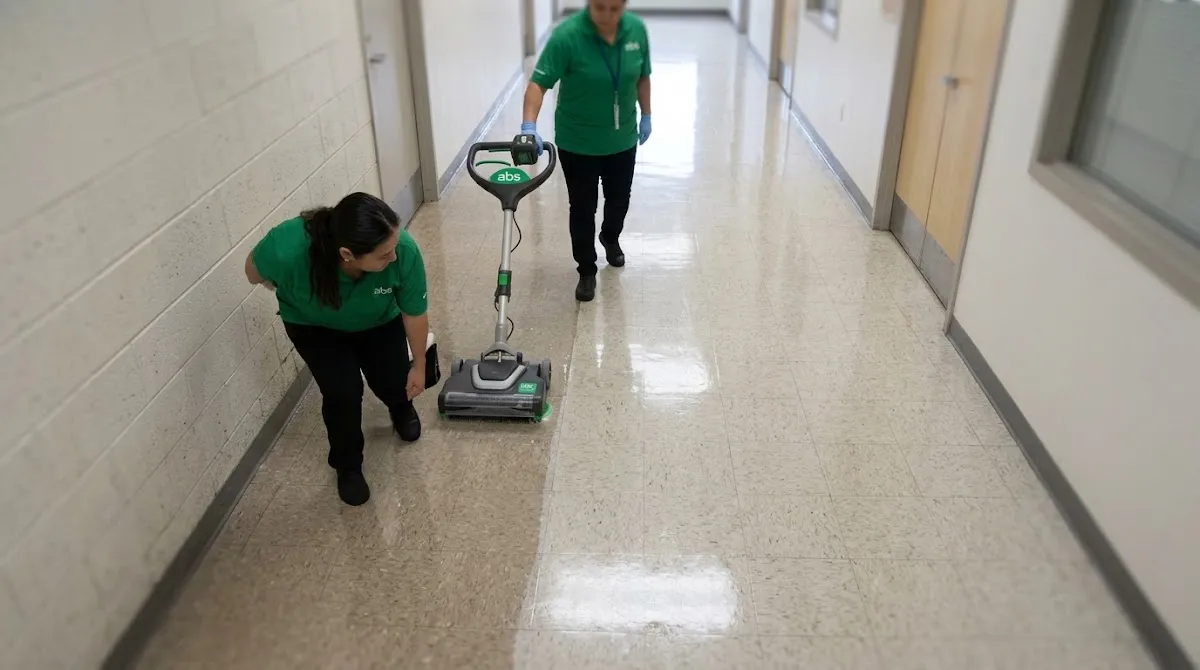
Daily sweeping and wet mopping with a neutral pH solution keeps surface grit from scratching the finish. Between deep cleaning cycles, auto floor scrubbers and burnishers maintain the wax layer.
The critical service for VCT is the strip-and-wax cycle every six to 12 months. This process removes old, yellowed wax using specialized stripping equipment, cleans the exposed surface, and applies three to four fresh coats of finish.
Without regular maintenance, damaged VCT cannot be refinished and will need full replacement. Our San Antonio stripping and waxing crews handle this process from start to finish.
Ceramic and Porcelain Tile
Ceramic and porcelain surfaces are durable, but grout lines trap dirt and become discolored over time. Sweep or vacuum regularly to remove loose grit that can scratch glazed surfaces.
Mop with a tile-specific product and use a dedicated brush on discolored joints. Some natural stone requires periodic sealing to guard against absorption and moisture damage.
Concrete
Concrete is common in industrial and warehouse facilities and offers excellent durability under heavy loads. Dust mopping prevents buildup that dulls the surface and causes micro-scratching.
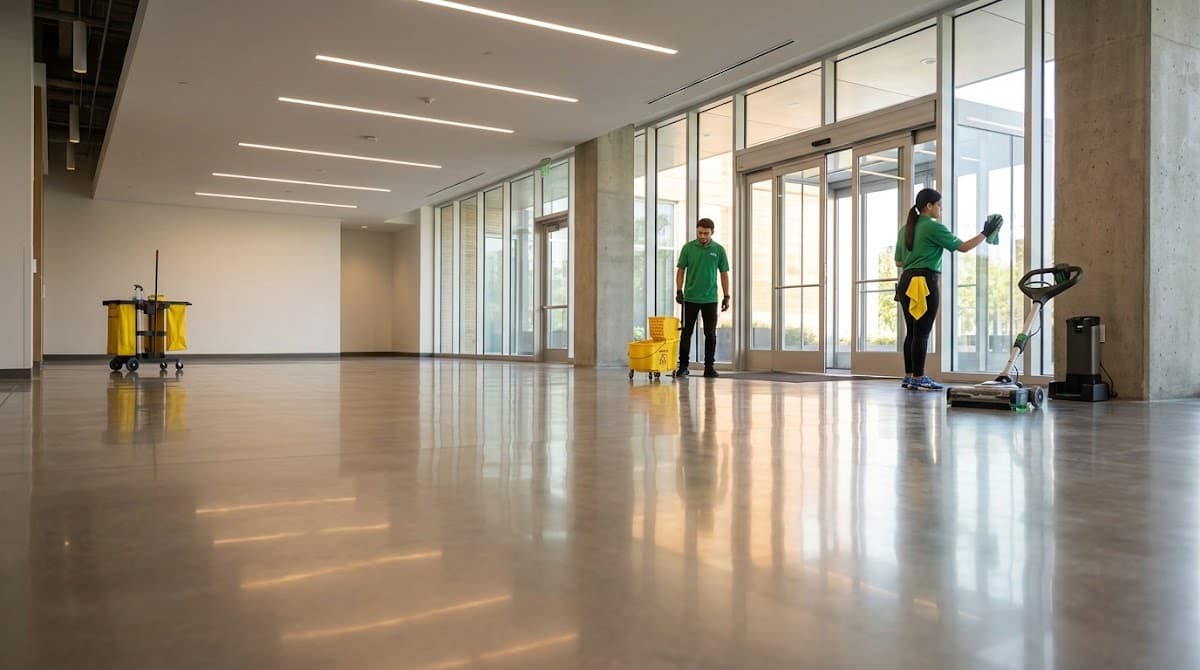
Most commercial concrete is sealed for resistance to marks and spills, and re-sealing is needed periodically. A polished surface reflects light and can reduce your lighting costs, but maintaining that shine requires periodic grinding and burnishing.
Wood Surfaces
Hardwood needs daily dust mopping with microfiber and weekly damp mopping with a wood-specific floor cleaner. Use minimal moisture, since excess water warps the surface and damages the finish.
Never use steam cleaning on wood. Place protective mats under rolling office chairs. Periodic refinishing restores worn areas.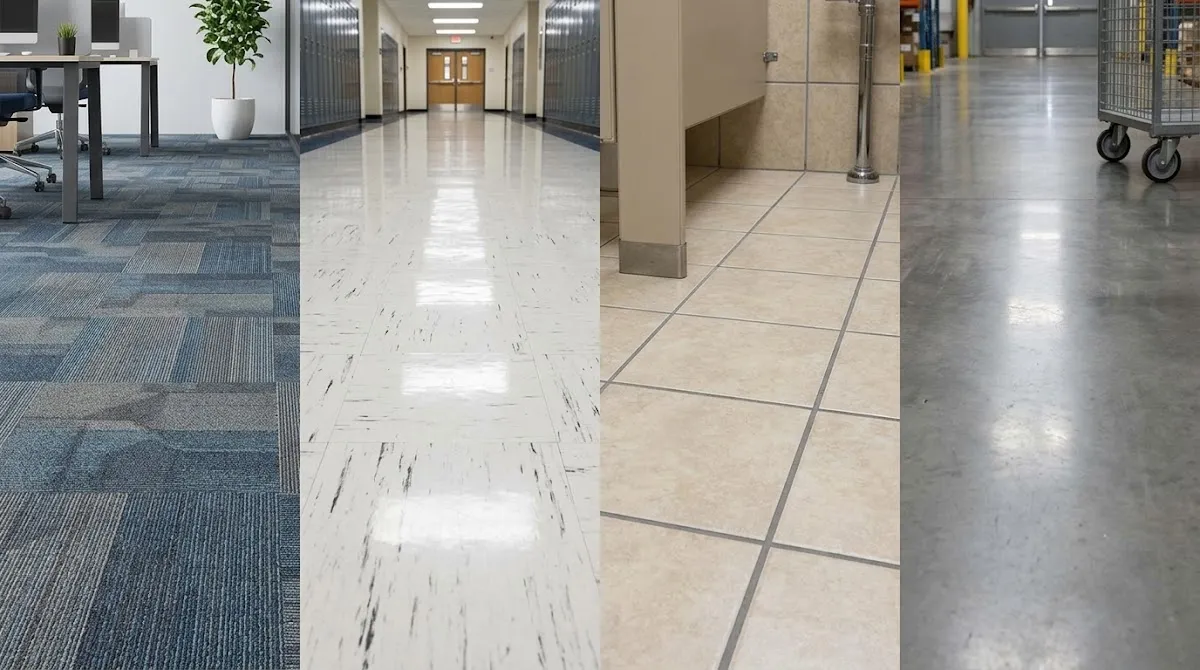
Luxury Vinyl (LVT and LVP)
Luxury vinyl plank and tile (LVT/LVP) are popular for their durability and lower cost. Sweep or dust mop daily, then damp mop with a pH-neutral product designed for this surface.
Harsh chemicals strip the protective finish. Damaged LVP cannot be spot-refinished like wood, so preventive care is especially important for extending the lifespan of these materials.
Daily, Weekly, and Periodic Maintenance Schedule
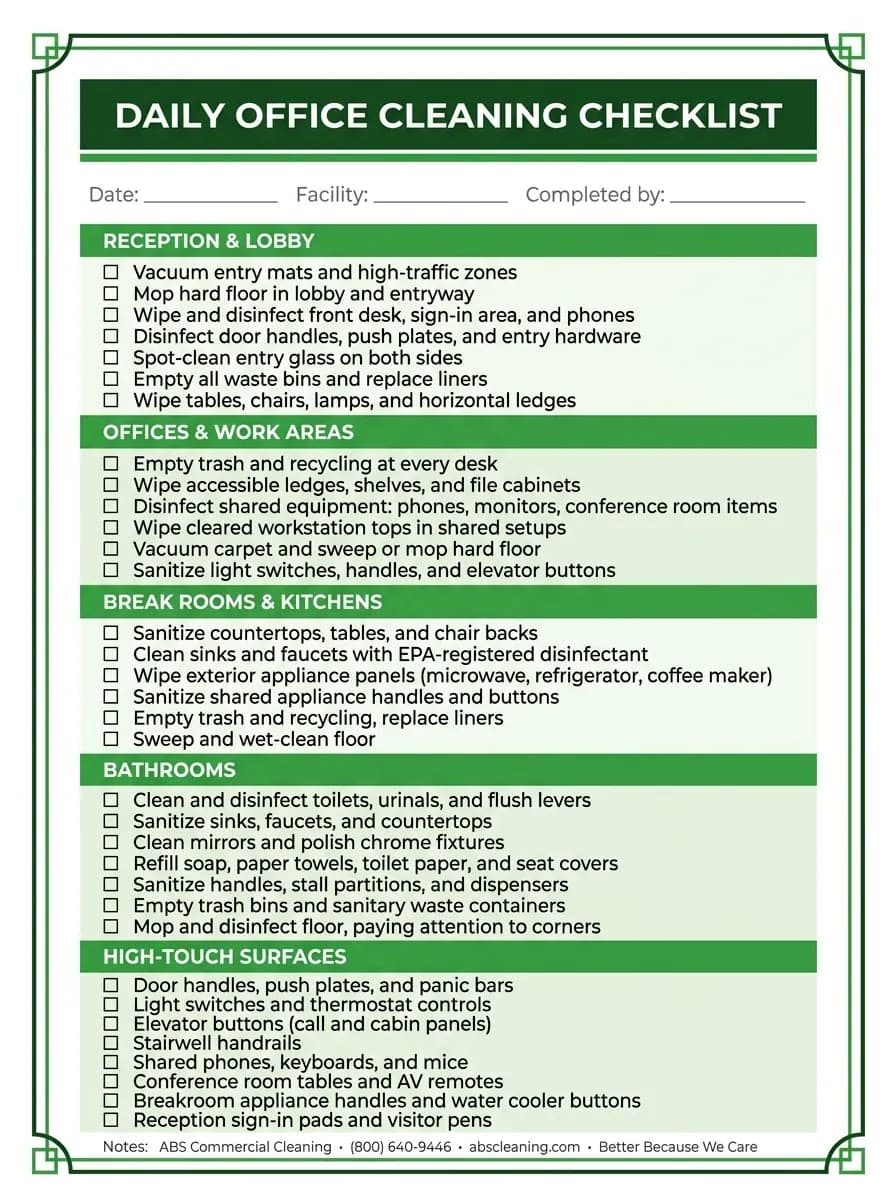
A consistent schedule is the foundation of effective floor care and maintenance. Here is a general framework you can adapt to your facility's unique needs and traffic levels.
| Frequency | Tasks |
|---|---|
| Sweep or dust mop all hard surfaces. Vacuum carpeted areas in busy zones. Spot-clean spills immediately. Wet mop with neutral pH products. | Daily |
| Machine-wash busy hard surfaces. Vacuum all carpeted areas thoroughly. Clean entryways and reception zones. Inspect for wear and tear. | Weekly |
| Buff or burnish hard surfaces to restore shine. Thoroughly clean carpet in heavy-use zones. Address discolored joints on tile. | Monthly |
| Strip and recoat VCT. Schedule professional extraction. Re-seal concrete or natural stone. | Quarterly to Semi-Annual |
For busy facilities like retail stores, lobbies, or medical offices, increase frequency across the board. A day porter can handle ongoing maintenance during business hours without disrupting daily operations.
Choosing the Right Products and Equipment
Solutions and Chemicals
Selecting the right product matters more than most facility managers realize. Using the wrong formula on the wrong surface causes finish damage, discoloration, or safety hazards.
Neutral pH (around 7): Safe for daily use on most hard surfaces, including VCT, LVT, and sealed concrete.
Alkaline (pH 8 to 10): Effective on greasy or oily soils common in kitchens, break rooms, and industrial areas.
Acidic (pH 4.5 to 6.5): Used for hard water deposits and mineral buildup on tile surfaces.
Disinfectants: Required in healthcare facilities and any space where infection control is a priority. EPA-registered products must be used at the correct dilution ratio and contact time.
Never mix acidic and alkaline products together. Always follow manufacturer dilution instructions, typically one ounce per gallon or less for neutral formulas. After using disinfectants above two ounces per gallon, follow up with a clean water rinse.
Equipment
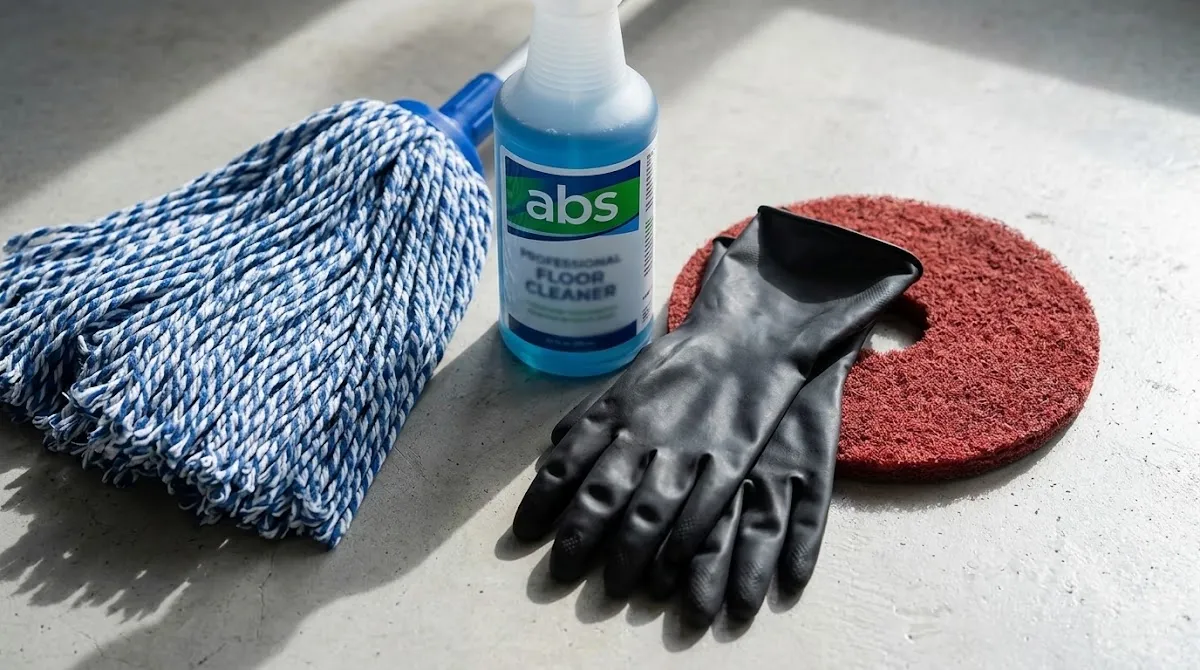
The right tools make the difference between surface-level results and a truly clean facility.
Microfiber dust mops: Best for daily dry cleaning on all hard surfaces. They trap dust and debris more effectively than cotton.
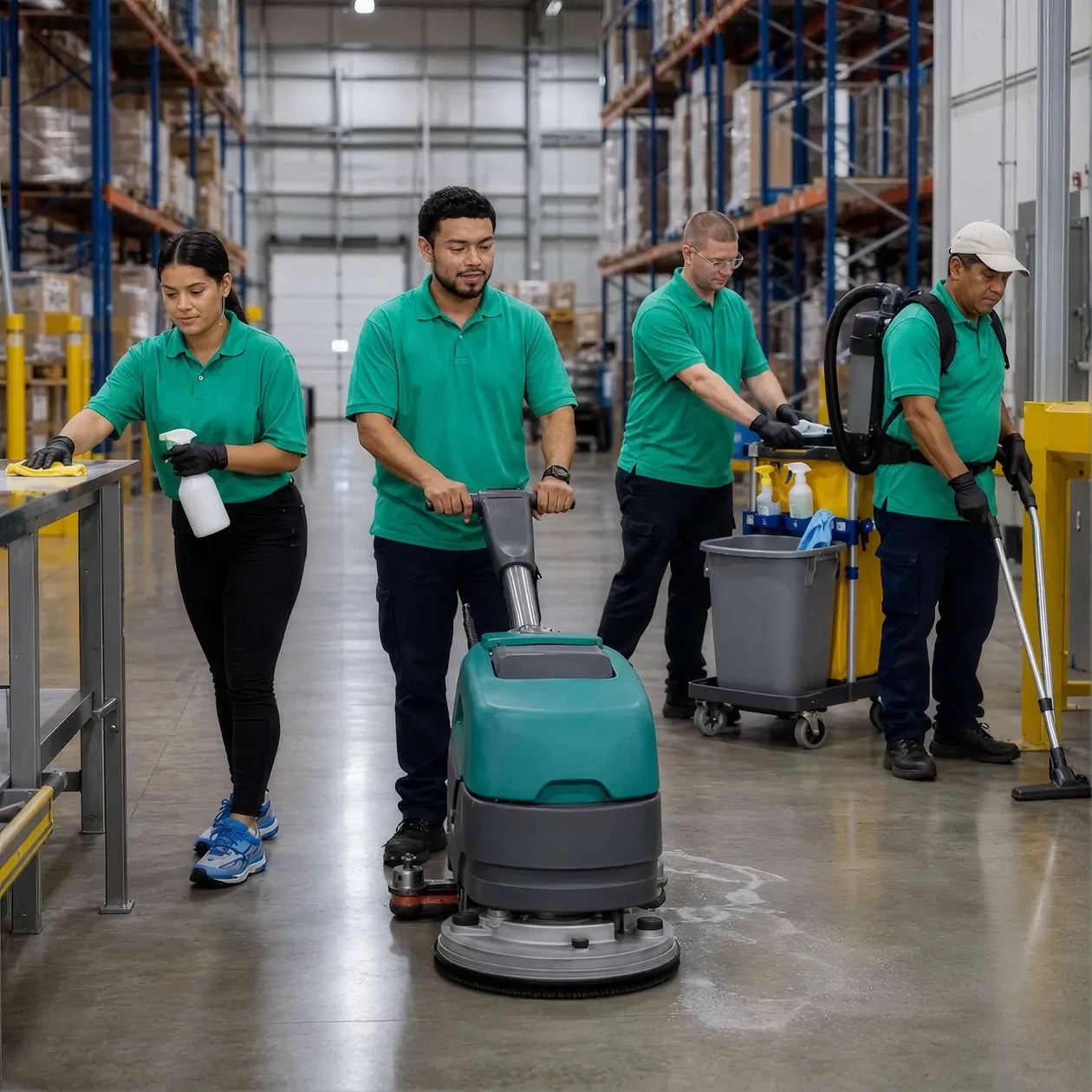
Auto scrubbers: Walk-behind and ride-on models for medium to large facilities. These apply product, agitate, and collect dirty water in one pass.
Buffers and burnishers: Buffers operate at lower speeds for stripping and intensive cleaning. Burnishers run at higher RPMs to polish and restore shine.
Commercial vacuums: HEPA-filtered models for carpet and upholstery. Backpack models cover large areas faster.
Extractors: Combine hot water and cleaning solutions for thorough soil removal during scheduled services.
Your floor care team should match equipment to each surface and facility size. A 2,000-square-foot office needs different tools than a 50,000-square-foot warehouse.
Preventive Measures That Reduce Damage
Preventing dirt from reaching your surfaces is the most cost-effective strategy available. Industry standards recommend entrance matting that extends 10 to 14 feet inside each doorway, with width matching the full door opening. Use non-staining backing material and clean or replace mats regularly.
Additional preventive steps include:
Install walk-off mats in corridors beyond the entryway
Attach felt pads to furniture legs and inspect chair casters for damage
Address spills within minutes to prevent penetration and slip hazards
Control indoor humidity to protect moisture-sensitive surfaces like wood and laminate
Post wet-surface signage whenever mopping or cleaning is in progress
These measures extend the life of every surface in your building and reduce the frequency of restoration services.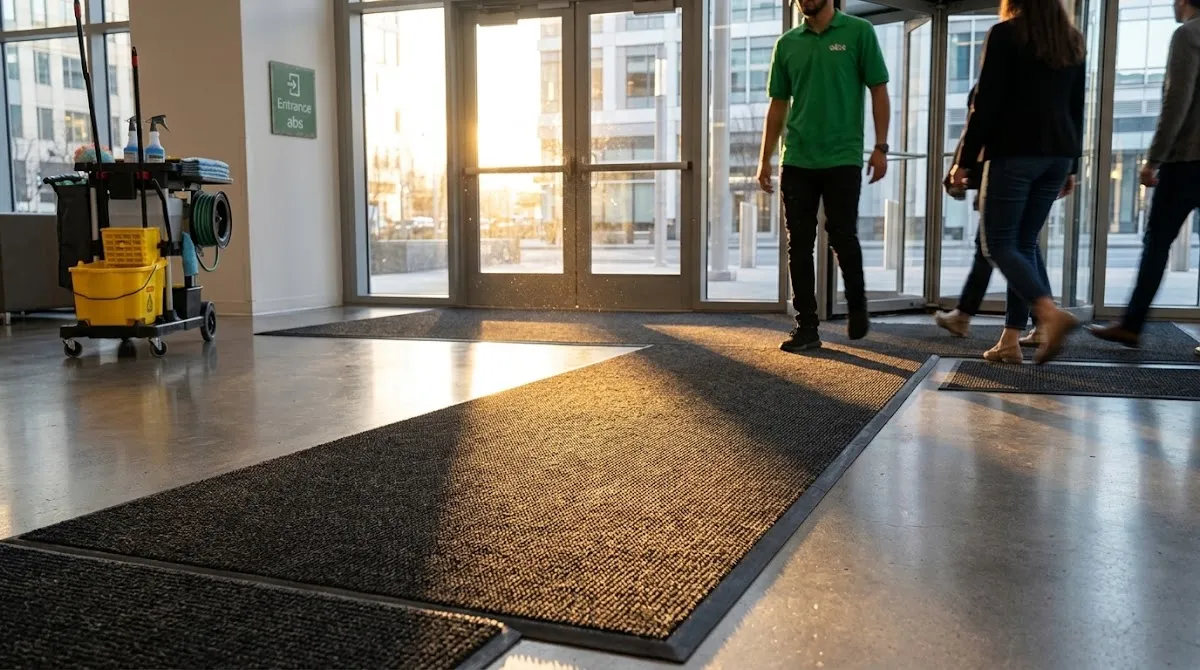
Compliance and Safety Considerations
Commercial floor cleaning is not just about appearance. OSHA requires that walking and working surfaces remain free of hazards that cause slips, trips, and falls. The CDC recommends proper disinfection of busy common areas in facilities where infection control matters, including medical offices, schools, and daycares.
Healthcare and clinical facilities need EPA-registered disinfectants applied at manufacturer-specified dilution ratios. Schools and daycare centers require child-safe products and after-hours scheduling.
Industrial and warehouse spaces must maintain slip-resistant surfaces that meet OSHA workplace standards. Multiple states, including Texas, have adopted green cleaning guidelines for public buildings.
When to Hire a Professional
Some maintenance tasks, like daily sweeping or vacuuming, can be handled in-house. But services like VCT stripping, hot water extraction, concrete polishing, and grout restoration require trained professionals with specialized equipment.
Signs you need professional floor cleaning services:
VCT looks yellow, scuffed, or dull despite regular mopping
Broadloom has visible traffic lanes or persistent odors after vacuuming
Joints between tiles are discolored and standard mopping does not improve them
Concrete has lost its polish or shows micro-cracking
Your team spends more time on surfaces than on their primary responsibilities
Outsourcing janitorial and floor care to a dedicated partner gives you access to specialized equipment, trained crews, and consistent results across all commercial spaces in your portfolio. It also reduces liability exposure and keeps your team members focused on running the business.
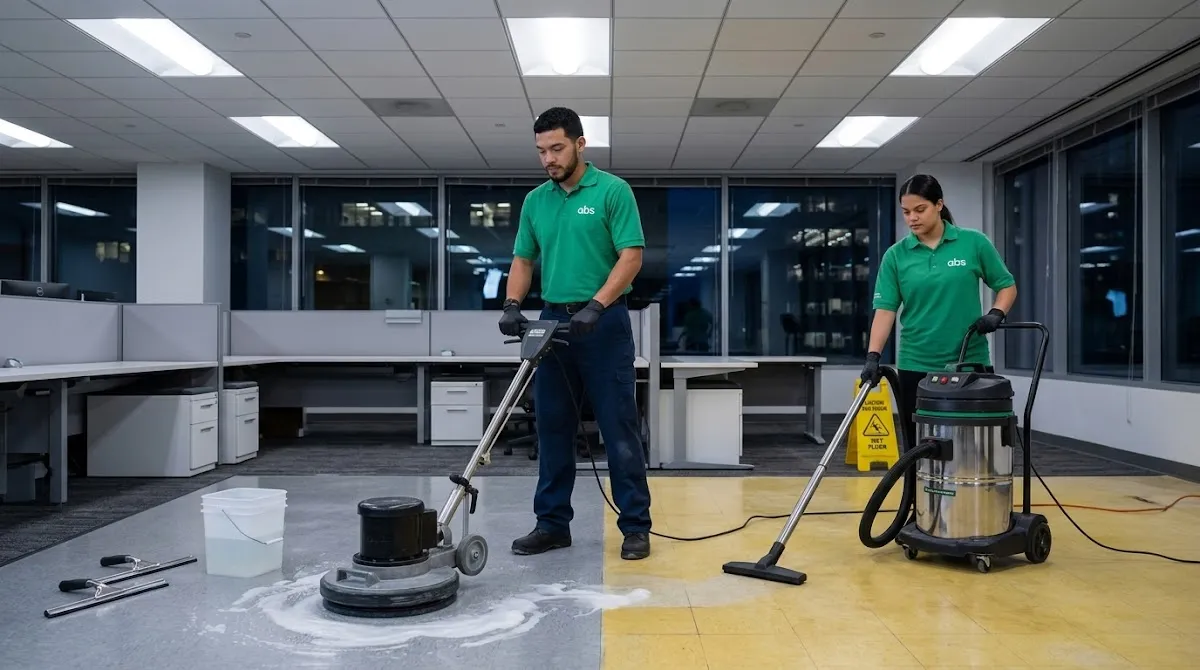
How ABS Commercial Cleaning Handles Your Surfaces
We build every plan around your facility's size, surface types, traffic patterns, and compliance requirements. Whether you need weekly office cleaning in Austin with daily maintenance or quarterly strip-and-wax service across multiple locations, we customize the scope to fit.
Our cleaning professionals arrive with commercial-grade supplies and equipment for every job. We offer flexible scheduling, including nights, weekends, and holidays, so maintenance happens without disrupting daily operations.
And because we're bonded and fully insured with an A+ BBB rating, you get accountability that national franchises and one-person operations cannot match.
Call (737) 289-0337 or request a quote to get a customized plan for your facility.
Frequently Asked Questions About Commercial Floor Cleaning
How often should commercial surfaces be cleaned?
Frequency depends on the type of flooring and traffic volume. Busy hard surfaces need daily sweeping and mopping. Intensive cleaning, such as buffing or machine washing, should happen weekly or monthly. VCT strip-and-wax cycles typically run every six to 12 months. Professional extraction is recommended one to two times per year for carpet.
What is the best way to maintain VCT?
VCT floor maintenance starts with daily sweeping and wet mopping using a neutral pH product. Between strip cycles, burnishing restores surface shine. The full strip-and-wax process every six to 12 months removes old finish, cleans the bare surface, and applies fresh protective coats. Skipping this cycle leads to permanent discoloration and costly replacement.
Can you clean different surface types in the same facility?
Yes. Most facilities have multiple floor types, such as carpet in offices, VCT in hallways, and ceramic in restrooms. Each surface requires its own cleaning routines, products, and equipment. A professional partner builds a plan that addresses every surface under one service agreement.
How do entrance mats help with maintenance?
Entrance mats capture dirt, moisture, and debris before they spread across your facility. Industry guidelines recommend mats extending 10 to 14 feet inside each doorway. Properly maintained mats reduce tracked-in soil by up to 80%, which directly cuts cleaning time and repair costs.
What products are safe for most commercial surfaces?
Neutral pH formulas are safe for daily use on most hard surfaces, including VCT, LVT, and sealed concrete. Specialty products exist for wood, natural stone, and commercial carpet. Avoid bleach, ammonia, or acidic products unless specifically recommended for your surface type, as these can damage finishes and void manufacturer warranties.
How does professional care reduce liability?
Well-maintained surfaces reduce slip-and-fall incidents, which are among the most common workplace injuries. Regular floor cleaning removes hazards like wet spots, wax buildup, and loose debris. Professional services also document schedules and methods, which supports OSHA compliance and provides records if a liability claim arises.