
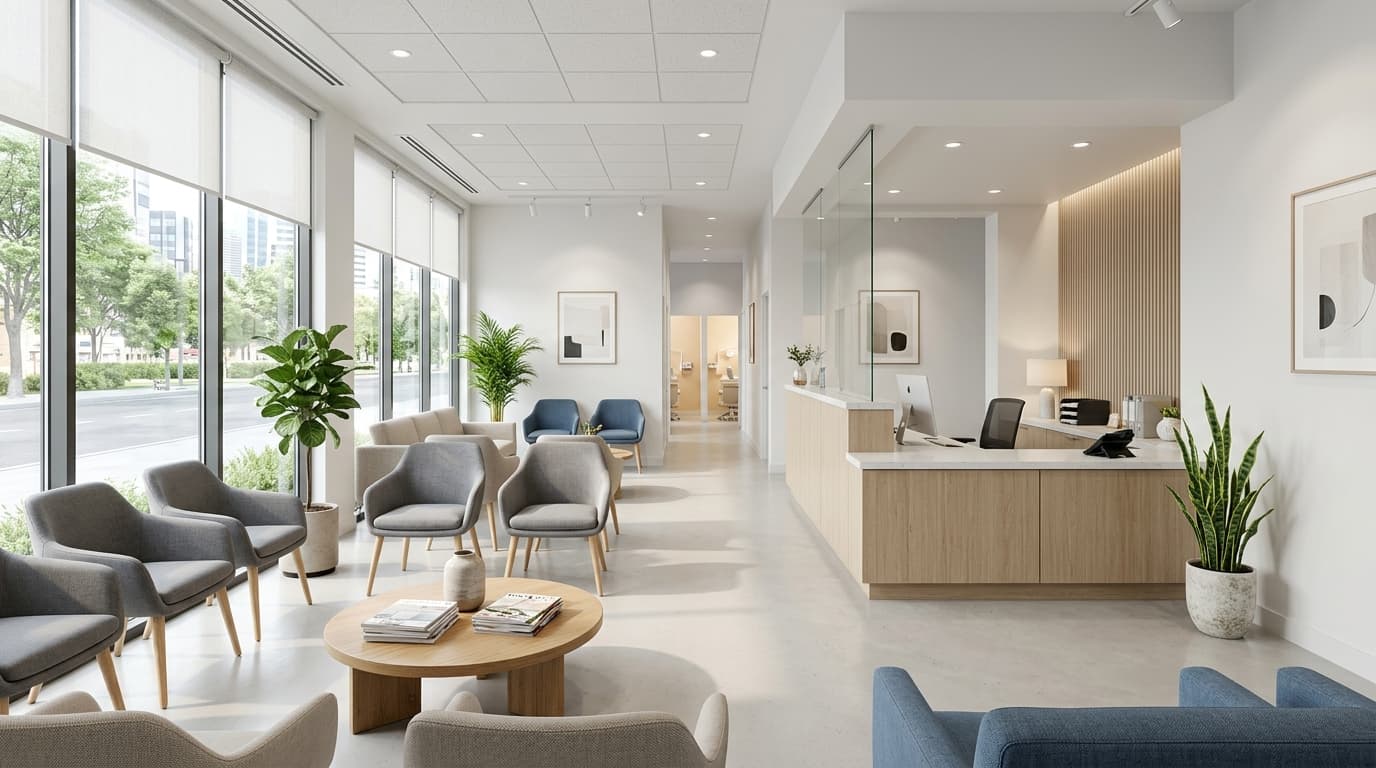
Patients form opinions about your dental practice before they sit in the chair. A stained ceiling tile, dusty blinds, or a smudged mirror can undo months of clinical reputation building. That first impression starts with cleanliness and ends with trust.
Our background-checked, professionally trained crews follow infection control protocols tailored to healthcare environments across Austin, Houston, San Antonio, Dallas, and Fort Worth.
Key Takeaways
High-touch surfaces in a dental facility require attention at least three times per day.
Federal guidelines recommend a two-step approach: clean first to remove debris, then apply a hospital-grade disinfectant.
Weekly tasks include air vent inspection, equipment checks, and upholstery vacuuming.
Monthly deep cleaning covers HVAC grates, grout lines, carpet extraction, and equipment maintenance.
EPA-registered hospital-grade products are required for all clinical surfaces.
The American Dental Association recommends hiring professional services for dental facilities.
Why Every Dental Practice Needs a Cleaning Checklist
A structured dental office cleaning checklist reduces cross-contamination risk and helps ensure your dental facility stays aligned with federal cleaning standards.
The Occupational Safety and Health Administration (OSHA), the Centers for Disease Control and Prevention (CDC), and the American Dental Association (ADA) all publish specific protocols for surface treatment, instrument sterilization, and waste disposal in healthcare settings.
Without a written plan, duties default to memory. Team members forget to flush waterlines. Suction lines go uncleaned. Light switches and credit card terminals, two of the highest-touch surfaces in any practice, get overlooked.
A documented schedule also protects your practice during an inspection. Cleaning activities with sign-offs and timestamps create a paper trail that demonstrates compliance. That paper trail becomes your first line of defense if a regulatory body requests proof of your cleaning protocols.
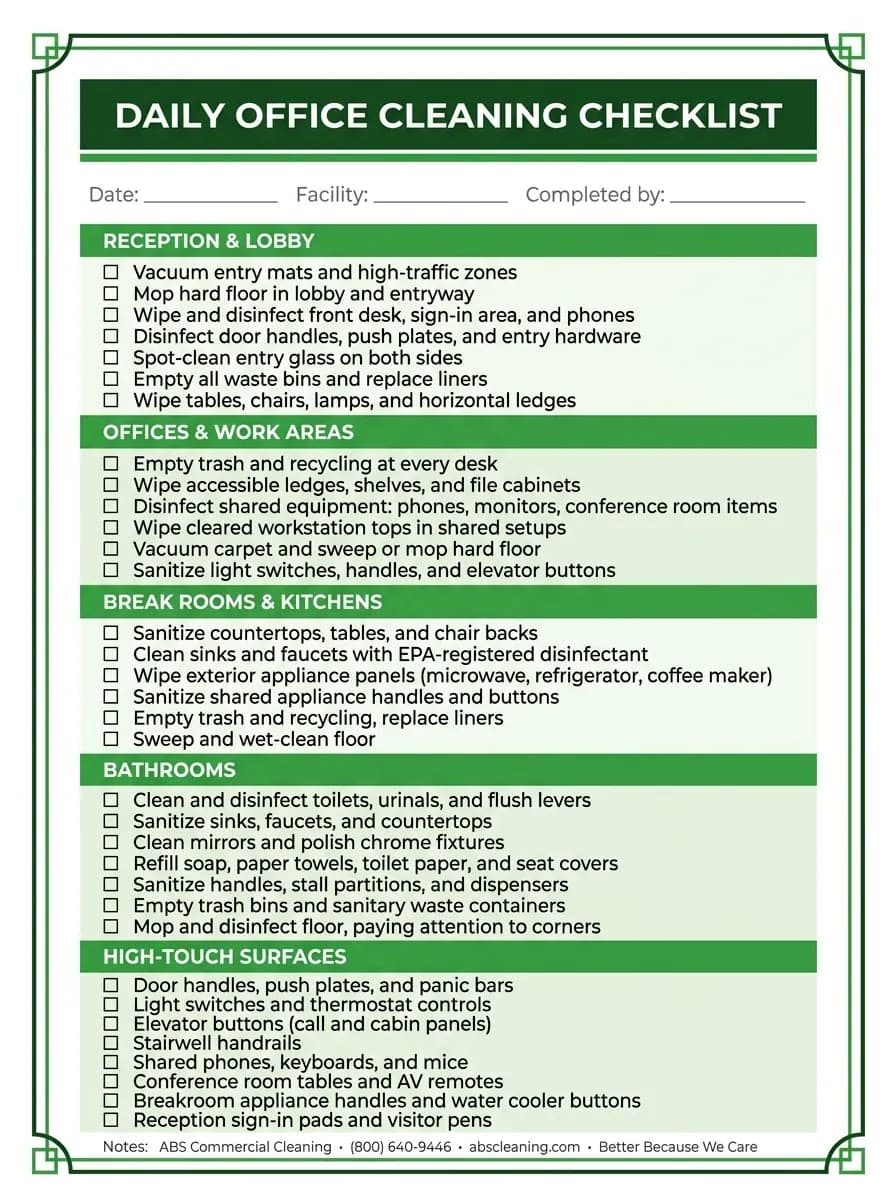
Daily Dental Office Cleaning Tasks + Printable
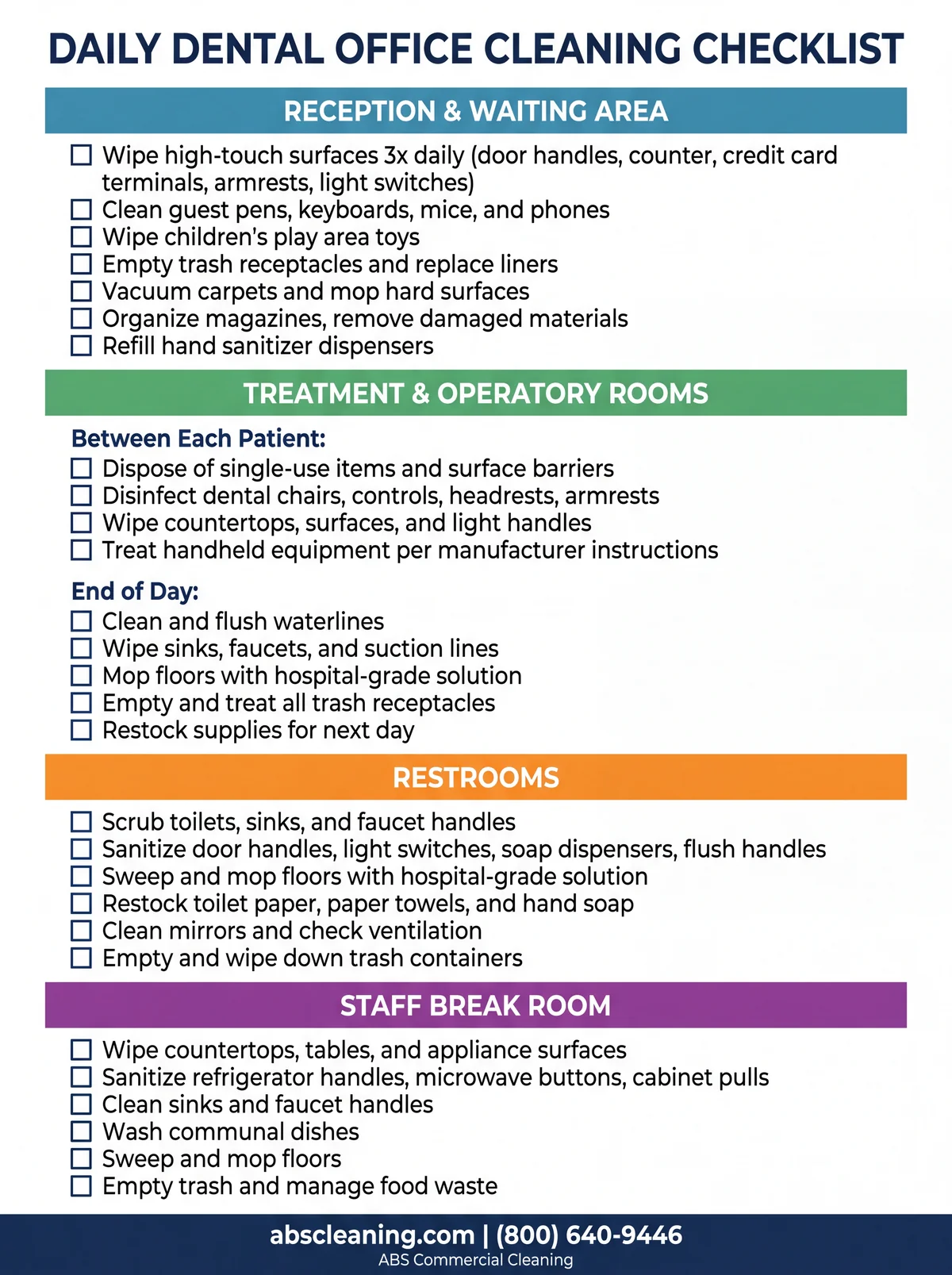
Daily duties form the foundation of hygiene in any dental facility. Break them into four zones: reception, treatment rooms, bathrooms, and staff areas.
Reception and Waiting Area
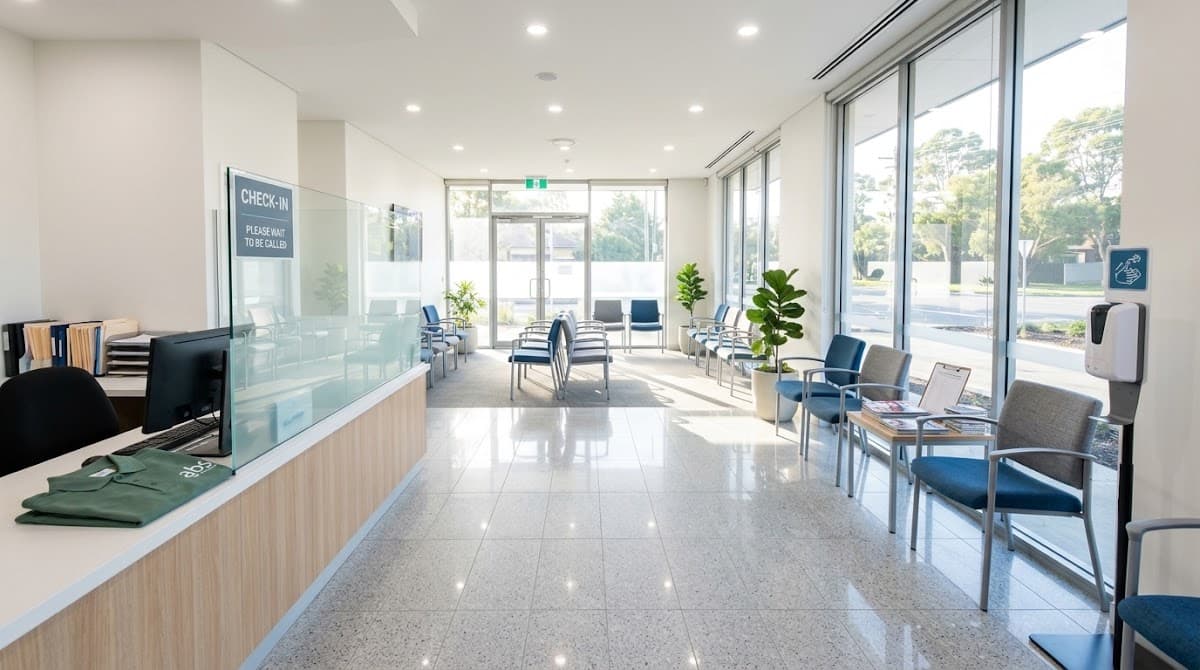
Your waiting area shapes the patient experience before the appointment begins. Daily duties include:
Wipe high-touch surfaces at least three times daily: door handles, reception counter, credit card terminals, chair armrests, and light switches
Clean guest pens, keyboards, mice, and phones
Wipe children's play area toys with approved healthcare-grade products
Empty trash receptacles and replace liners
Vacuum carpeted areas and mop hard surfaces
Organize magazines and remove damaged reading materials
Refill hand sanitizer dispensers
Use separate cloths for different areas to prevent cross-contamination between zones. A color-coded system, where blue cloths are reserved for general surfaces and red for bathrooms, helps your team maintain proper sanitation standards.
Treatment and Operatory Rooms
Treatment rooms require both between-patient protocols and end-of-day procedures.
Between each patient:
Dispose of all single-use items and surface barriers
Clean and disinfect dental chairs, controls, headrests, and armrests
Wipe countertops, horizontal surfaces, and light handles
Treat handheld equipment per manufacturer instructions
End of day:
Clean and flush waterlines
Wipe sinks, faucets, and suction lines
Mop floors with hospital-grade solution
Empty and treat all trash receptacles
Restock supplies for the next day
Follow the recommended two-step approach for all clinical surfaces: remove visible debris first, then apply a registered product with the proper contact time. This is a non-negotiable best practice for any dental facility.
Restroom Care
The restroom reflects your commitment to patient care. Daily bathroom duties include:
Scrub toilets, sinks, and faucet handles
Sanitize door handles, light switches, soap dispensers, paper towel holders, and flush handles
Sweep and mop floors with hospital-grade solution
Restock toilet paper, paper towels, and hand soap
Clean mirrors and check ventilation
Empty and wipe down trash containers
Staff Break Room
Your break room deserves the same attention as patient-facing areas. Germ transfer between staff spaces and clinical areas is a real risk. Daily duties include:
Wipe countertops, tables, and appliance surfaces
Sanitize high-touch points: refrigerator handles, microwave buttons, coffee maker controls, cabinet pulls, and switches
Clean sinks and faucet handles
Wash communal dishes
Sweep and mop floors
Empty trash containers and manage food waste
Weekly Cleaning Duties
Weekly tasks go beyond surface-level maintenance and target areas where dust, biofilm, and bacteria accumulate over time.
Reception and common areas:
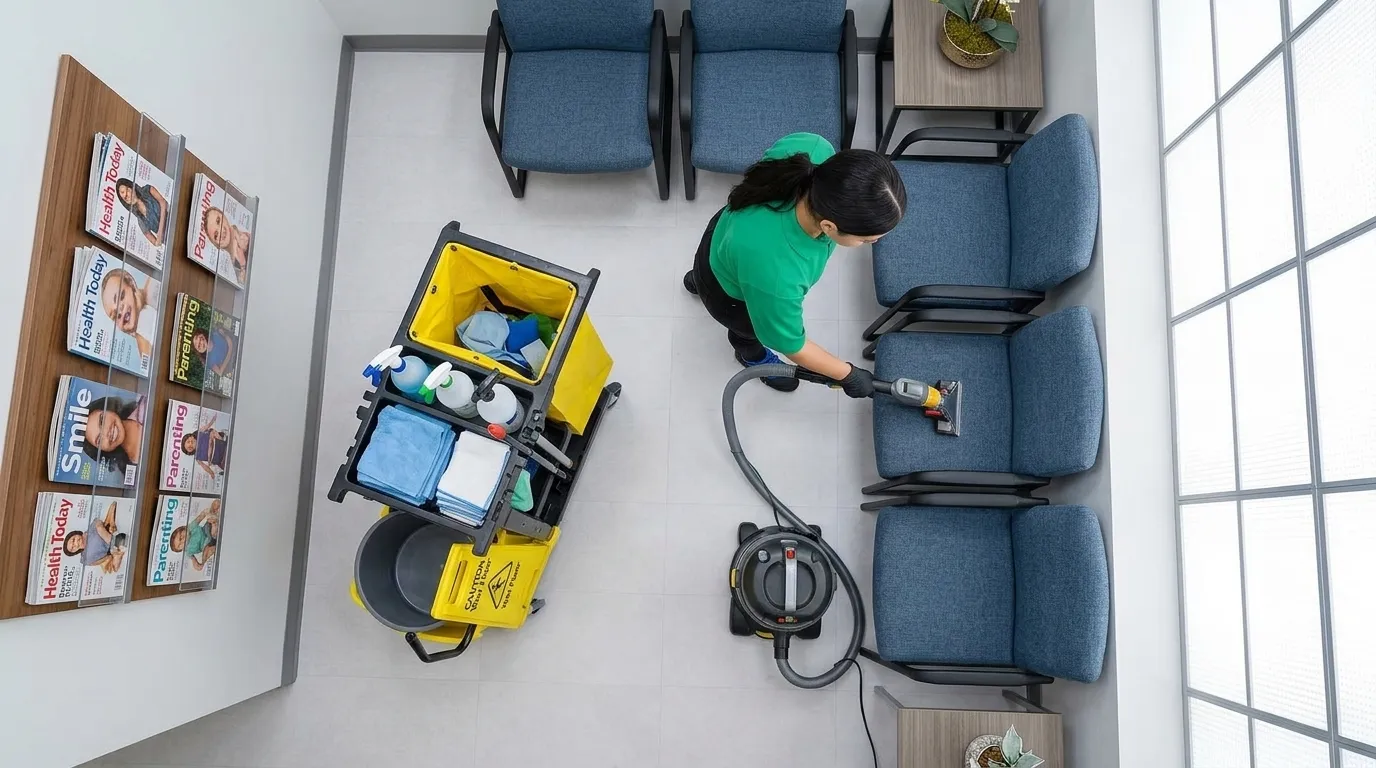
Deep vacuum upholstery on chairs and sofas
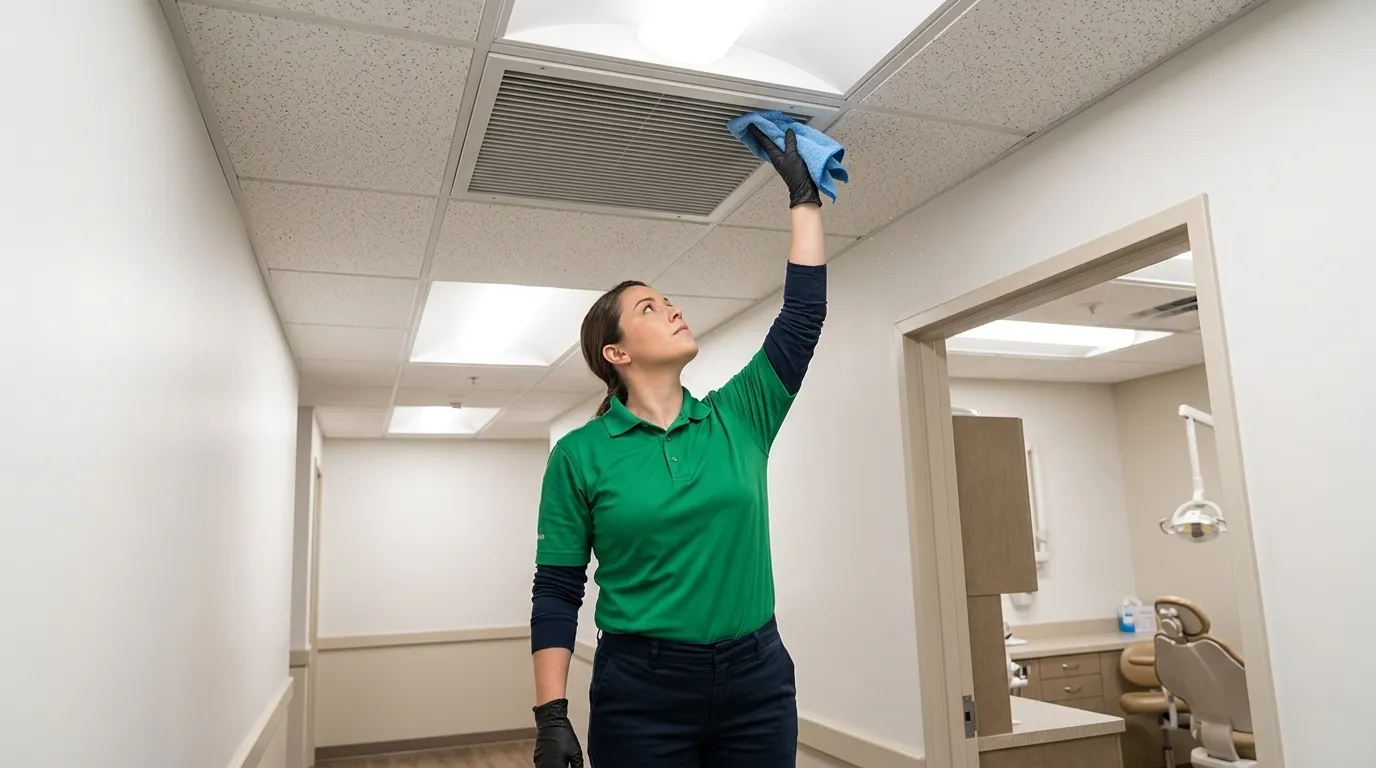
Dust all surfaces top to bottom, including window sills, picture frames, and ceiling vents
Polish all glass surfaces, including windows and door panels
Review magazine racks and remove outdated materials
Shred confidential documents per HIPAA and privacy requirements
Clean floor mats and rugs
Treatment rooms:
Inspect dental equipment and machinery per manufacturer guidelines
Check air vents and filters to maintain air quality
Wipe walls, including corners and areas behind equipment
Check drawer interiors and look at dental chairs for upholstery wear or cracks that could harbor bacteria
Test sterilization equipment and document results
Check supply inventory and restock as needed
Utility and storage areas:
Organize storage cabinets
Check expiration dates on stored supplies
Treat waste disposal areas
Clean floors under stationary equipment
Inspect waterlines and flush systems
Staff areas:
Deep clean the refrigerator and remove expired food
Wipe keyboards, phones, and shared devices
Launder shared cloth items like towels
Clean all appliance exteriors
For practices with commercial carpet in their lobby, weekly vacuuming should include upholstery extraction to remove embedded allergens and soil.
Monthly Deep Cleaning and Maintenance
Monthly cleaning covers the hard-to-reach areas and equipment maintenance that daily and weekly duties don't address.
Facility work:
| Area | Monthly Focus |
|---|---|
| Treatment rooms | Vacuum room vents, dust baseboards, polish floors, wipe HVAC vents and grates |
| Reception | Deep clean upholstery and carpets using hot water extraction, check decorative items |
| Bathrooms | Polish floors, clean window treatments, wash blinds |
| Break room | Clean coffee maker with vinegar, wipe window sills, polish floors |
| Exterior | Wash windows and signage, check outdoor lighting |
| Hard-to-reach areas | Work behind stationary equipment, address grout lines to prevent mold |
Equipment maintenance (monthly):
Test autoclaves and sterilization equipment per manufacturer recommendations
Look for upholstery cracks on treatment chairs that could harbor bacteria
Service vacuum systems and suction equipment
Check waterlines and flush with approved solutions
Check emergency eyewash stations
Verify fire extinguishers and emergency gear are accessible and current
Systems review:
Audit your protocols against the latest federal and ADA guidelines
Review team procedures and schedule quarterly refresher sessions
Check supplies and PPE inventory
Update safety data sheets (SDS) for all chemicals used on site
Check emergency exit pathways
Evaluate air filtration systems and replace filters as recommended
Between-Patient Protocols
Between-patient turnover is unique to dental and medical office environments. Every operatory changeover requires defined steps to maintain a safe environment and prevent cross-contamination.
The process follows a specific order:
Remove and dispose of all surface barriers and single-use items
Wipe all surfaces to remove visible debris and organic matter
Apply an approved hospital-grade product to chairs, countertops, light handles, and controls
Allow proper contact time before the next patient is seated
Restock disposable supplies and prepare the room
Proper cleaning at this stage is not something you can rush. Skipping steps or cutting contact time short puts both patient and staff safety at risk. Many practices assign a dedicated team member to operatory turnover, while a day porter from a professional partner handles the non-clinical zones.
OSHA, CDC & ADA Compliance
Three regulatory bodies govern how dental offices manage cleanliness and compliance across their spaces.
| Agency | What They Regulate |
|---|---|
| OSHA | Workplace safety, handling of infectious materials, bloodborne pathogen exposure protocols |
| CDC | Surface treatment protocols, instrument sterilization standards, infection control guidelines |
| ADA | Best practices for dental-specific prevention and safety |
Key compliance requirements include:
Use approved hospital-grade products on all clinical and high-touch surfaces
Discard clinical waste according to EPA standards
Maintain safety data sheets for every chemical on site
Document all activities with timestamps for readiness during an inspection
Train team members on proper techniques and provide regular updates when guidelines change
Federal agencies publish updated recommendations periodically. Designate a team member to monitor these changes and bring them to quarterly staff training meetings. A well-maintained facility that passes with documented protocols gives your dental practice peace of mind and protects your license.
Professional Dental Office Cleaning Services vs. In-House Staff
The ADA recommends hiring a professional cleaning company to supplement in-house efforts. Here's why the split model works:
In-house staff handles:
- Between-patient operatory turnover
- Instrument sterilization and clinical area prep
- Chairside cleanup and disposal of clinical waste
A professional cleaning partner handles:
- Daily cleaning in reception, bathrooms, break rooms, and shared spaces
- Weekly and monthly deep cleaning
- Specialized cleaning like carpet extraction, floor polishing, and electrostatic treatment
- Compliance-aligned sanitization of all non-clinical surfaces
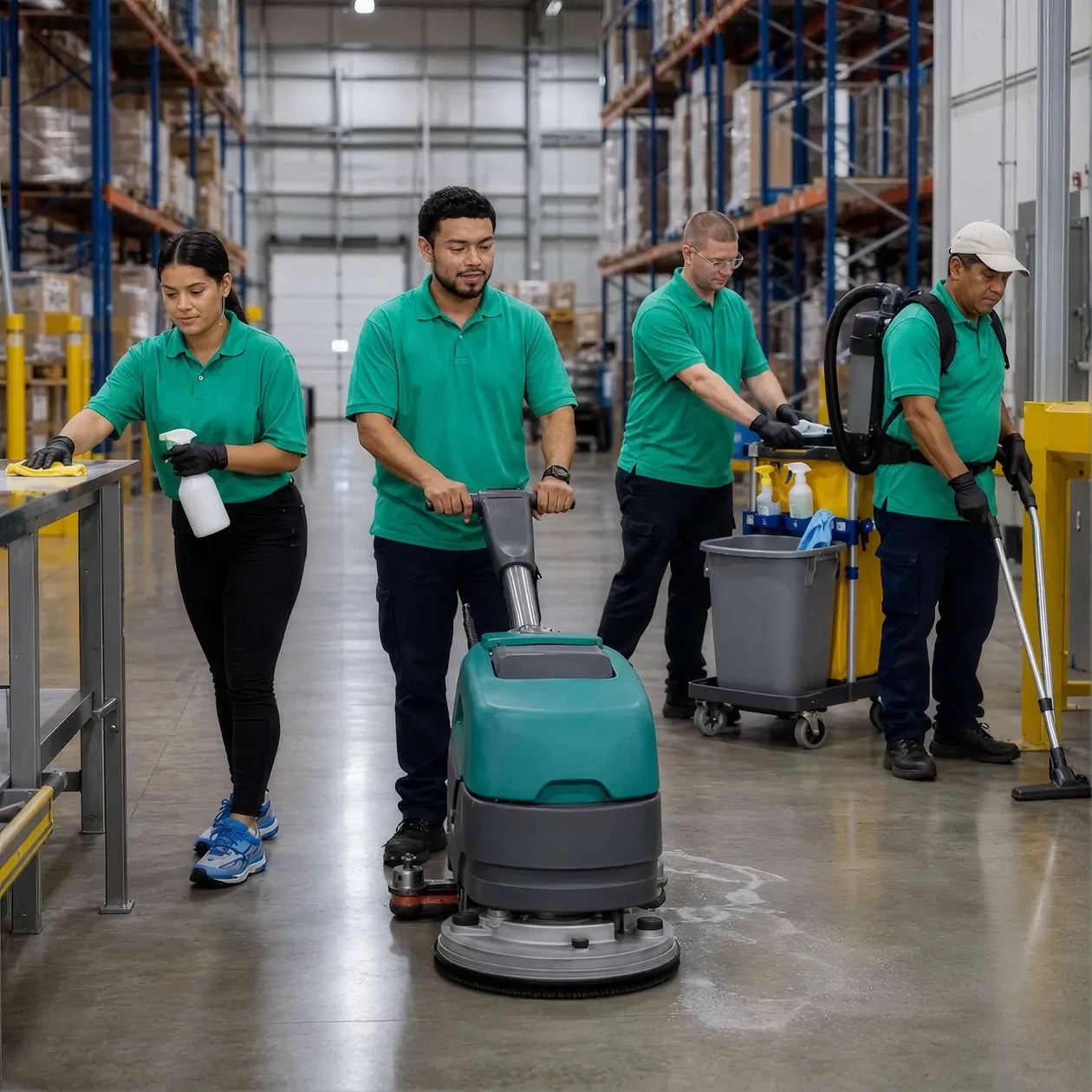
Professional crews trained in healthcare environments understand the difference between sanitize and disinfect, know which products meet federal standards for a dental clinic, and follow a cleaning process that doesn't interfere with your daily operations.
Keep Your Facility Clean and Safe With ABS Commercial Cleaning
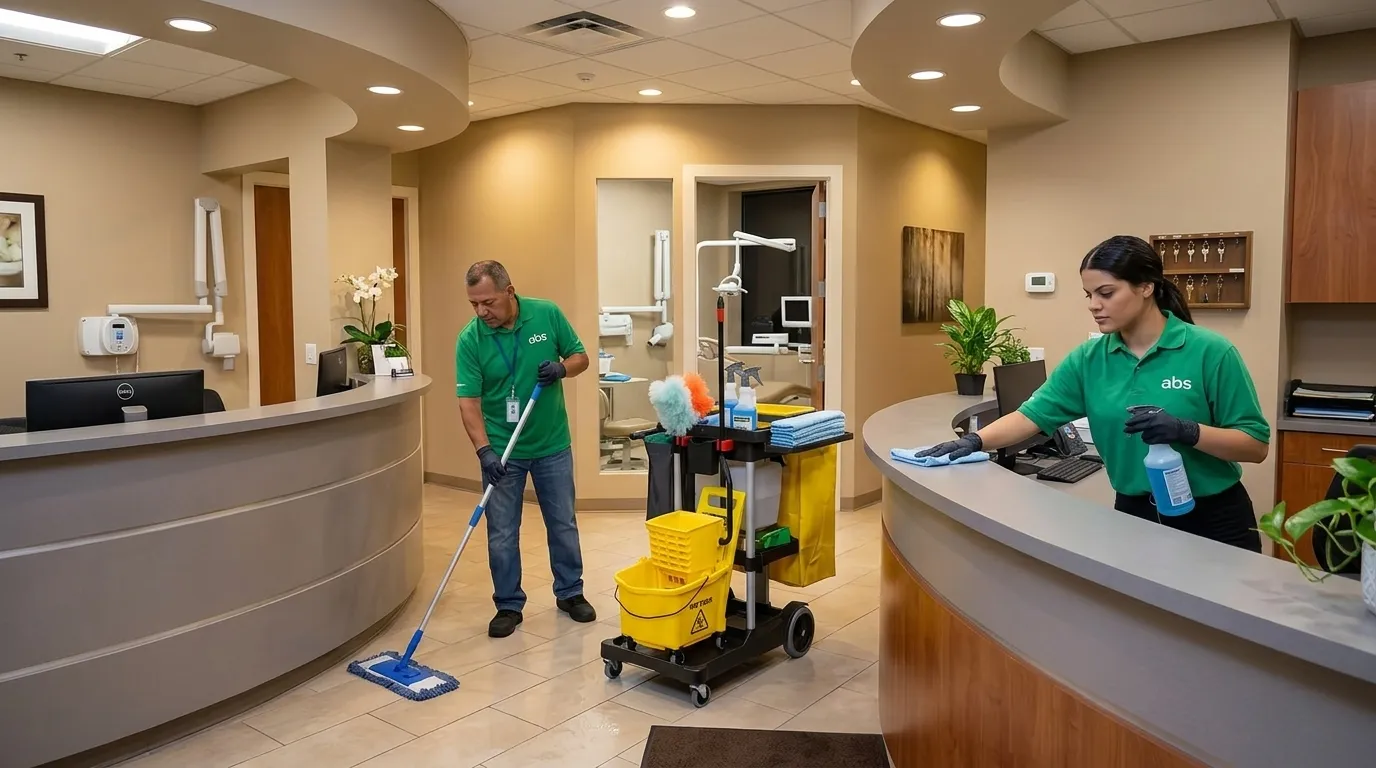
A dental office cleaning checklist is only as good as the cleaning crew executing it. At ABS Commercial Cleaning, we assign dedicated, background-checked teams to every healthcare facility we serve.
Our crews follow protocols specific to medical and dental environments, and we build a customized cleaning plan around your dental office's size, schedule, and cleaning needs.
We serve practices across Austin, Houston, San Antonio, Dallas, and Fort Worth with flexible scheduling that includes nights, weekends, and holidays.
Call (737) 289-0337 or request a free quote to discuss your dental care needs today. Schedule Your Service Today!
Frequently Asked Questions About Dental Office Cleaning
How often should high-touch surfaces in a dental facility be treated?
High-touch surfaces should be wiped at least three times daily using an approved hospital-grade product. Surfaces like door handles, reception counters, credit card terminals, and switches collect bacteria from every person who enters the building. Treatment room surfaces require attention between every patient.
What is the two-step approach for clinical environments?
Federal health authorities recommend wiping surfaces first to remove visible debris and organic matter, then applying a registered product with the appropriate contact time. This two-step method works because organic material can reduce product efficacy. All clinical and high-touch surfaces in a dental facility should follow this protocol.
Should a practice hire a professional service or handle everything in-house?
Most practices benefit from a split model. In-house staff manages between-patient operatory turnover and instrument sterilization. A professional service handles daily non-clinical work, weekly thorough sessions, and monthly maintenance. The ADA recommends professional services to help keep your facility clean and organized.
What products are safe for use around expensive and sensitive dental equipment?
Hospital-grade products approved for healthcare settings are the standard. Always follow manufacturer guidelines when working around office equipment, X-ray units, and handpieces. Avoid using bleach solutions on sensitive surfaces unless the manufacturer specifically approves it. Your cleaning partner should verify product compatibility before starting work.
How does a written plan help with compliance?
A written checklist for dental offices creates documented proof of your protocols. Federal regulations require practices to demonstrate compliance with bloodborne pathogen standards, and federal authorities expect documented surface treatment and sterilization procedures. Printed or digital checklists with sign-offs and timestamps provide the verification trail that reviewers look for during an inspection.
What weekly maintenance items are most commonly overlooked?
Air vent and filter care is the most commonly overlooked weekly task. Clogged or dirty filters reduce air quality and can spread airborne contaminants. Other frequently missed items include testing sterilization equipment, checking chair upholstery for cracks, and working behind stationary equipment where dust accumulates in a clean dental environment.