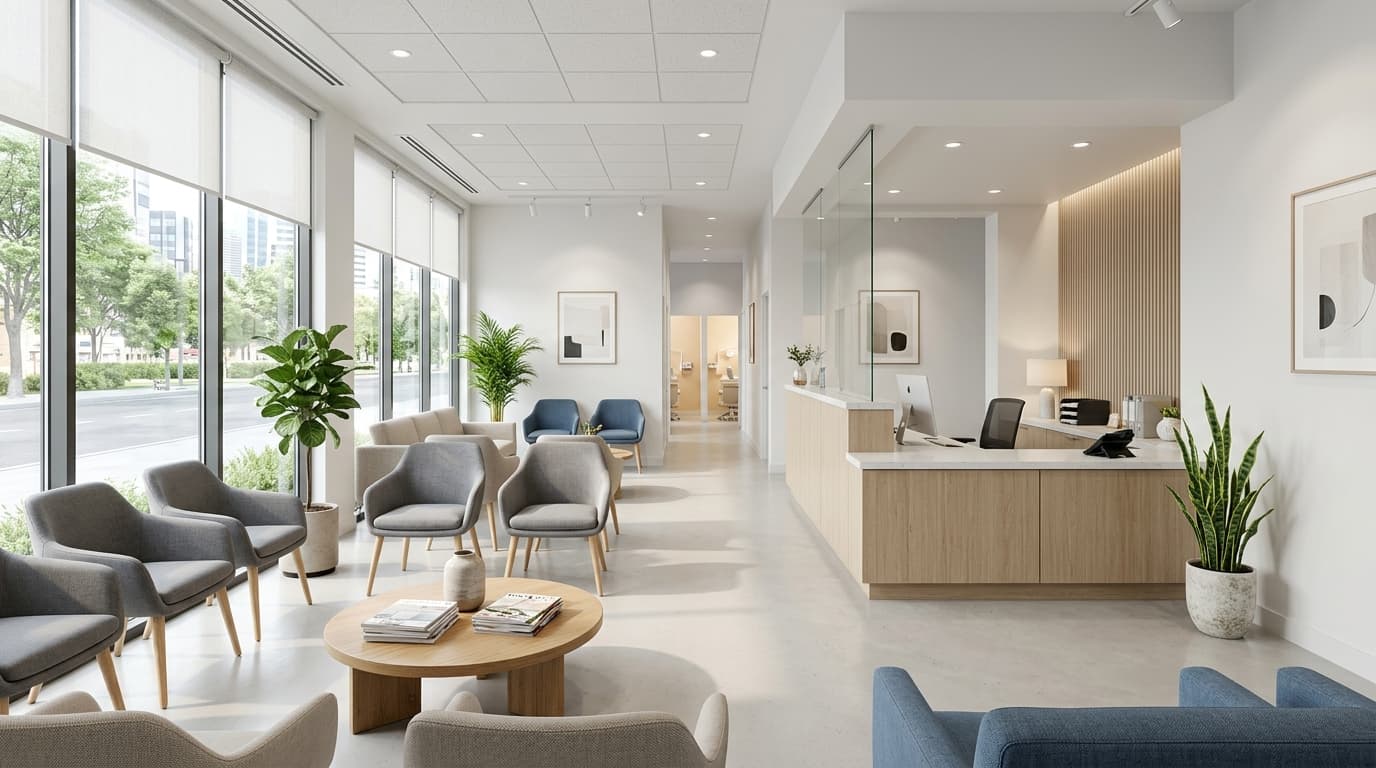

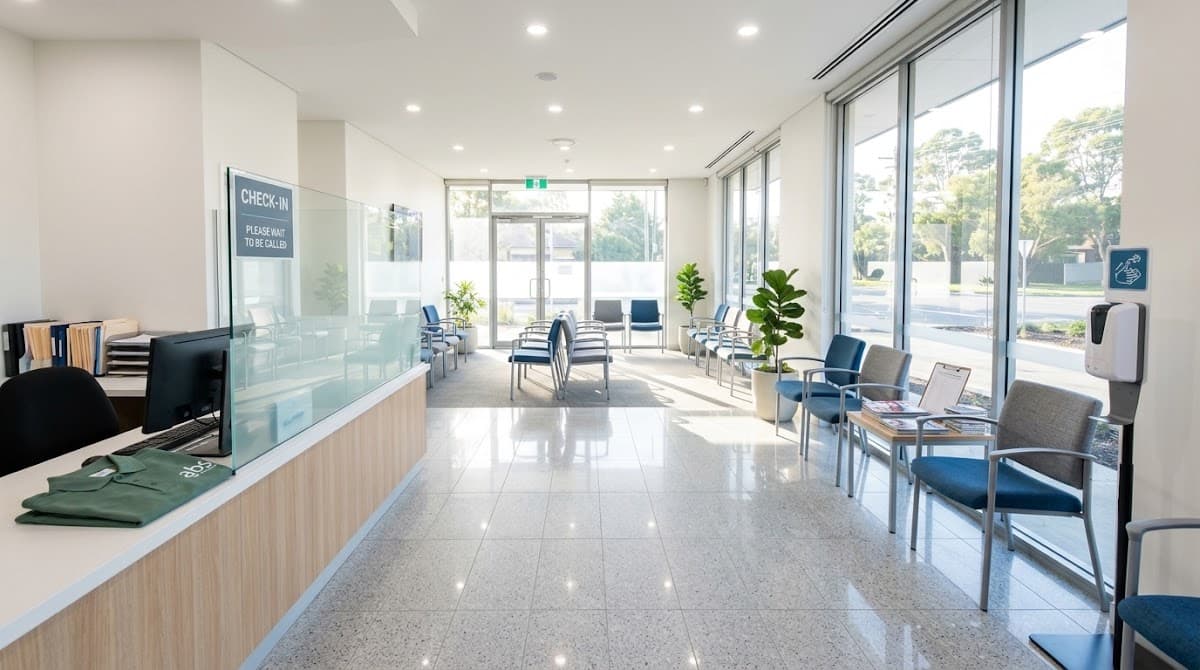
Patients expect a clean facility, and regulatory agencies require one. Between bloodborne risks, high-touch surfaces, and protected health records on screens and countertops, the stakes are higher than most people realize.
This comprehensive medical office cleaning checklist covers daily, weekly, and monthly cleaning tasks organized by room and frequency. Use it to audit your current program or build a new one from scratch.
Key Takeaways
Medical offices require daily cleaning of treatment areas, bathrooms, and lobbies.
HIPAA-compliant cleaning means trained crews who follow access protocols around patient records.
Weekly duties include diagnostic equipment, children's play areas, and conference rooms.
Monthly deep cleaning covers floor stripping, window washing, and ductwork.
Federal health and safety guidelines set the baseline for infection control in healthcare facilities.
A structured checklist reduces compliance risk and builds patient trust.
Why Medical Offices Need a Specialized Cleaning Checklist
Medical offices face stricter cleanliness standards than traditional commercial cleaning spaces. The Occupational Safety and Health Administration (OSHA) requires medical facilities to follow the bloodborne pathogens standard. The Centers for Disease Control and Prevention (CDC) sets infection prevention and control guidelines that affect how surfaces, medical equipment, and waste are handled.
Patients and staff move through lobbies, treatment areas, and bathrooms throughout the day. That foot traffic carries germs and contaminants that standard janitorial programs aren't designed to address. A single missed surface can contribute to the spread of infections across an entire practice.
Cleanliness in a medical office also affects how patients perceive care quality. A structured medical office cleaning program gives your practice a documented, repeatable process that protects both patient safety and your reputation.
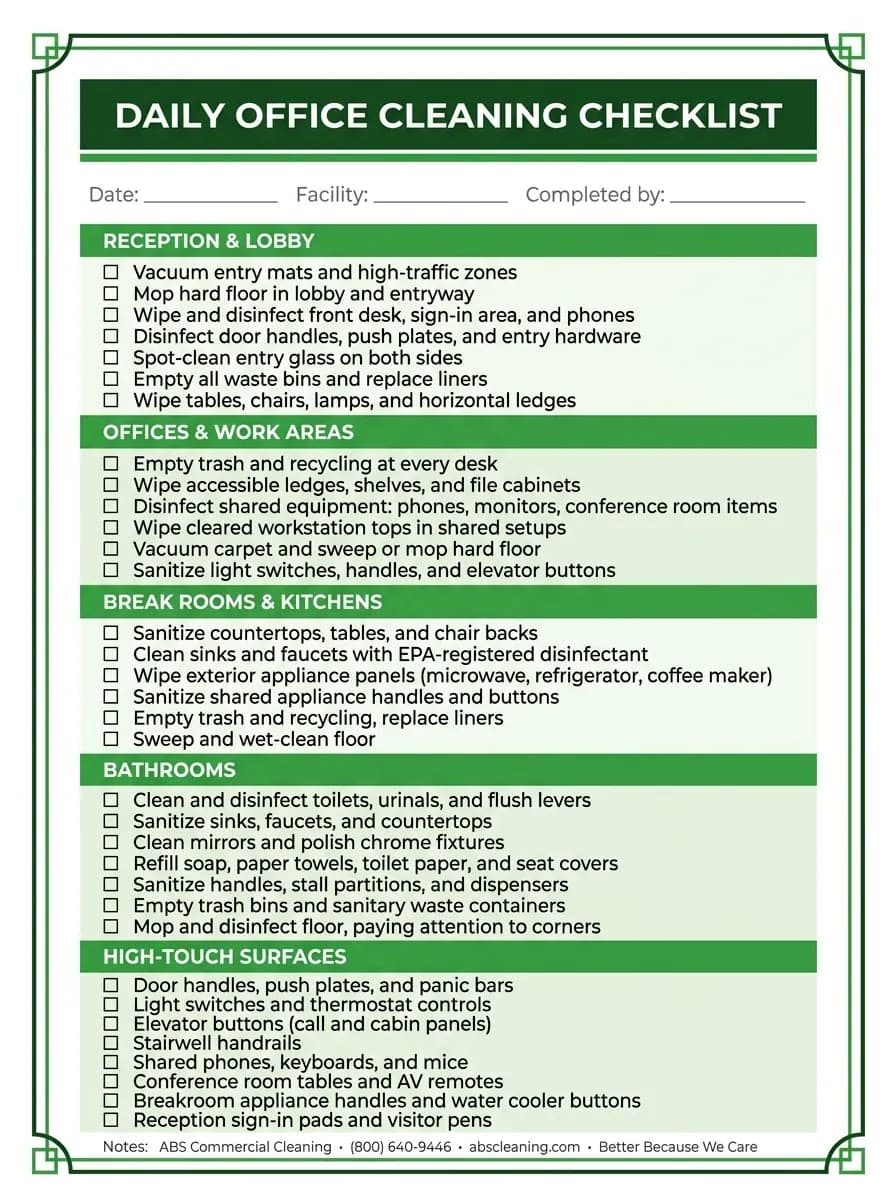
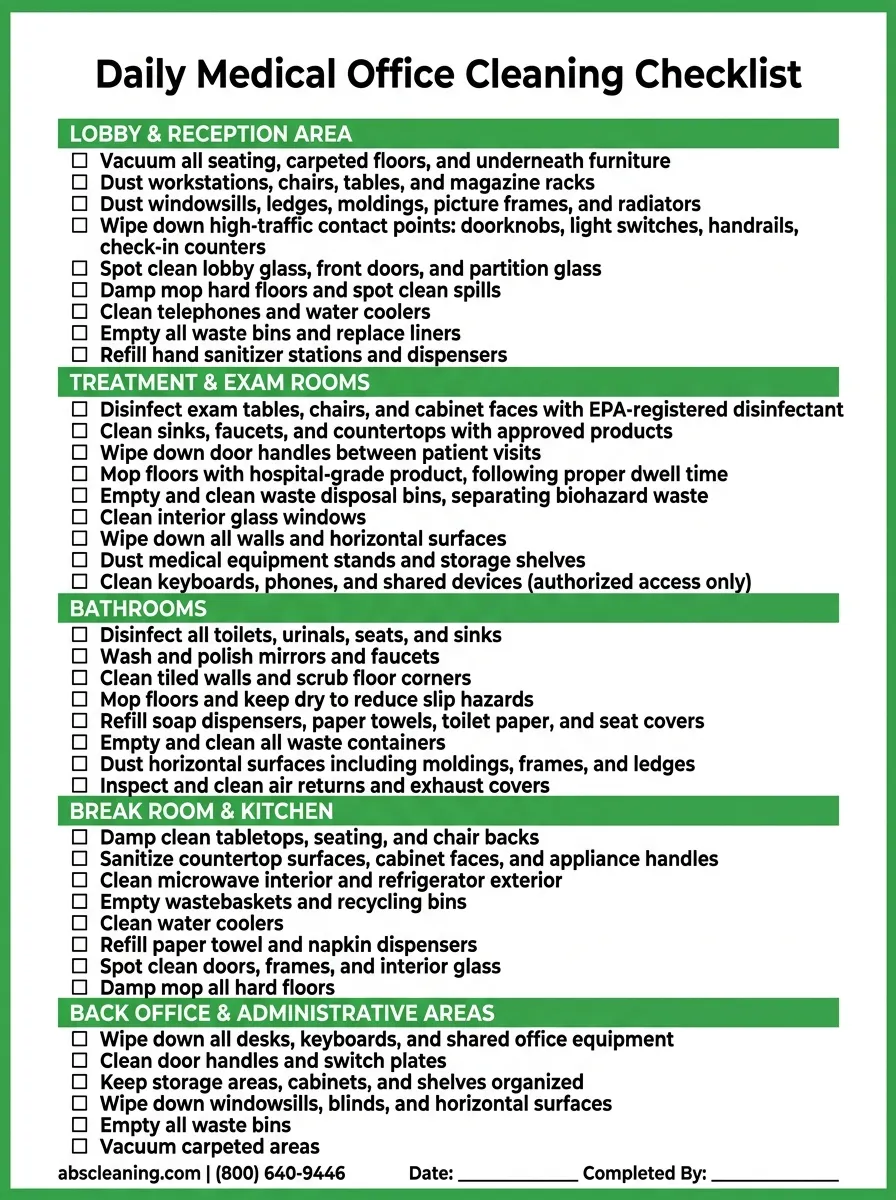
Daily Medical Office Cleaning Checklist
Daily cleaning duties form the foundation of your facility cleaning program. These should be completed every business day, either by in-house cleaning staff or a professional cleaning service.
Lobby & Reception Area
Vacuum all seating, carpeted floors, and underneath furniture
Dust workstations, chairs, tables, and magazine racks
Dust windowsills, ledges, moldings, picture frames, and radiators
Wipe down high-traffic contact points: doorknobs, light switches, handrails, and check-in counters
Spot clean lobby glass, front doors, and partition glass
Damp mop hard floors and spot clean spills on all floor types
Clean telephones and water coolers
Empty all waste bins and replace liners
Refill hand sanitizer stations and dispensers
Treatment & Exam Rooms
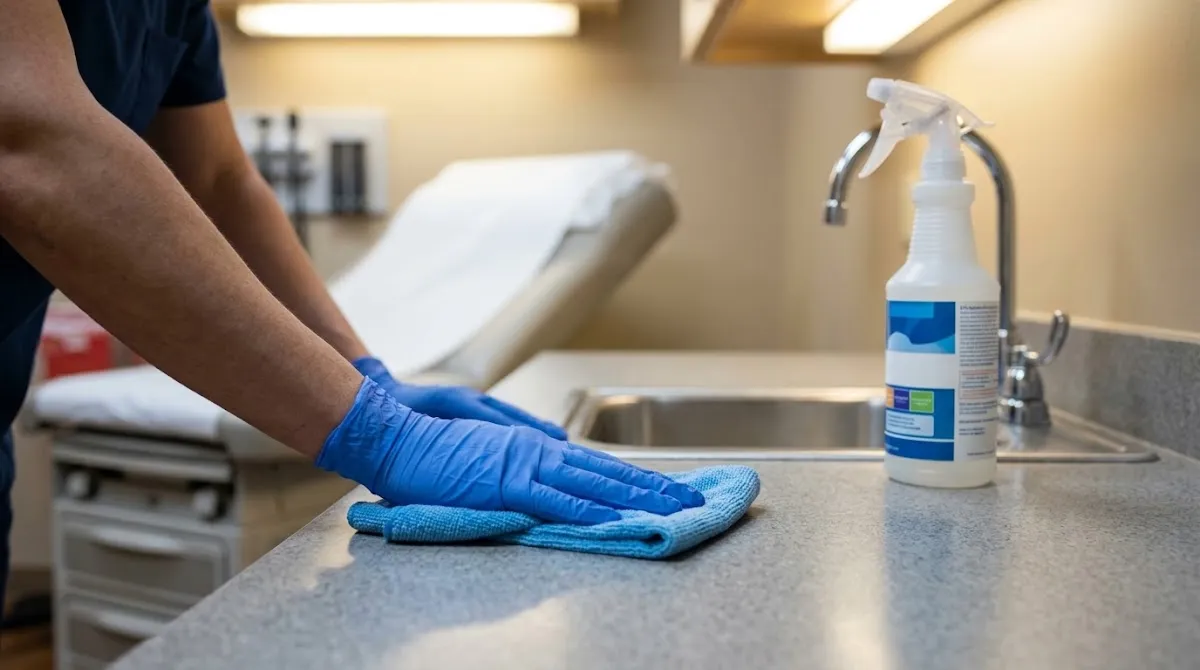
Disinfect exam tables, chairs, and cabinet faces with EPA-registered disinfectant
Clean sinks, faucets, and countertops with approved products
Wipe down door handles between patient visits
Mop floors with hospital-grade product, following proper dwell time
Empty and clean waste disposal bins, separating biohazard waste
Clean interior glass windows to remove fingerprints and debris
Wipe down all walls and horizontal surfaces
Dust medical equipment stands and storage shelves
Clean keyboards, phones, and shared devices (with authorized access only)
Bathrooms
Clean and disinfect all toilets, urinals, seats, and sinks
Wash and polish mirrors and faucets
Clean tiled walls and scrub floor corners
Mop floors and keep dry to reduce slip hazards
Refill soap dispensers, paper towels, toilet paper, and seat covers
Empty and clean all waste containers
Dust horizontal surfaces, including moldings, frames, and ledges
Inspect and clean air returns and exhaust covers
For facilities with high patient volume, consider adding midday restroom cleaning and sanitation through a day porter program.
Break Room & Kitchen
Damp clean tabletops, seating, and chair backs
Sanitize countertop surfaces, cabinet faces, and appliance handles
Clean microwave interior and refrigerator exterior
Empty wastebaskets and recycling bins
Clean water coolers
Refill paper towel and napkin dispensers
Spot clean doors, frames, and interior glass
Damp mop all hard floors
Back Office & Administrative Areas
Wipe down all desks, keyboards, and shared office equipment
Clean door handles and switch plates
Keep storage areas, cabinets, and shelves organized
Wipe down windowsills, blinds, and horizontal surfaces
Empty all waste bins
Vacuum carpeted areas
Weekly Cleaning Checklist for Medical Offices
Weekly cleaning goes beyond daily duties to address areas where germs and dust accumulate over time.
Disinfect all surfaces in conference rooms, including tables and workstations
Arrange conference room furniture and vacuum flooring
Clean and dust printers, copiers, and fax machines
Wipe down vending machine glass surfaces and buttons
Clean elevator buttons and accessible door controls
Dust diagnostic equipment (x-ray units, monitor stands)
Damp wipe all telephones and desk accessories
Clean children's lobby toys and play surfaces with approved product
Vacuum and clean flooring in children's play areas
Remove and replace any damaged or non-working toys
Check expiration dates on disinfectant and cleaner supplies
Inspect entrance mat condition and replace as needed
Children's play areas in medical offices carry unique risks. Kids touch everything, and viruses spread quickly on shared toys. Weekly cleaning is the minimum for any clinic with a pediatric waiting room.
Monthly & Periodic Deep Cleaning Checklist
Monthly and periodic cleaning duties keep your facility ready for inspection. Medical offices must comply with regulations that include routine deep cleaning procedures and records.
Monthly Duties
Machine buff vinyl composite tile (VCT) flooring
Scrub vinyl floors with commercial-grade cleaning agents
Wash exterior windows
High dust all horizontal surfaces, including shelves, moldings, and ductwork covers
Pull out and dust rolling file cabinets, then vacuum underneath
Dust blinds throughout the facility
Remove cobwebs from ceilings, pipes, and high partitions
Vacuum all upholstered furniture in lobbies and offices
Deep scrub bathroom floors
Inspect and replace HVAC air filters
Quarterly Duties
Wash all interior windows
Strip, wash, and wax VCT flooring
Deep clean all ductwork covers and air returns
Review cleaning supply stock and reorder as needed
Update cleaning protocols based on any new federal health and safety guidance
Frequently Touched Surface Priority List
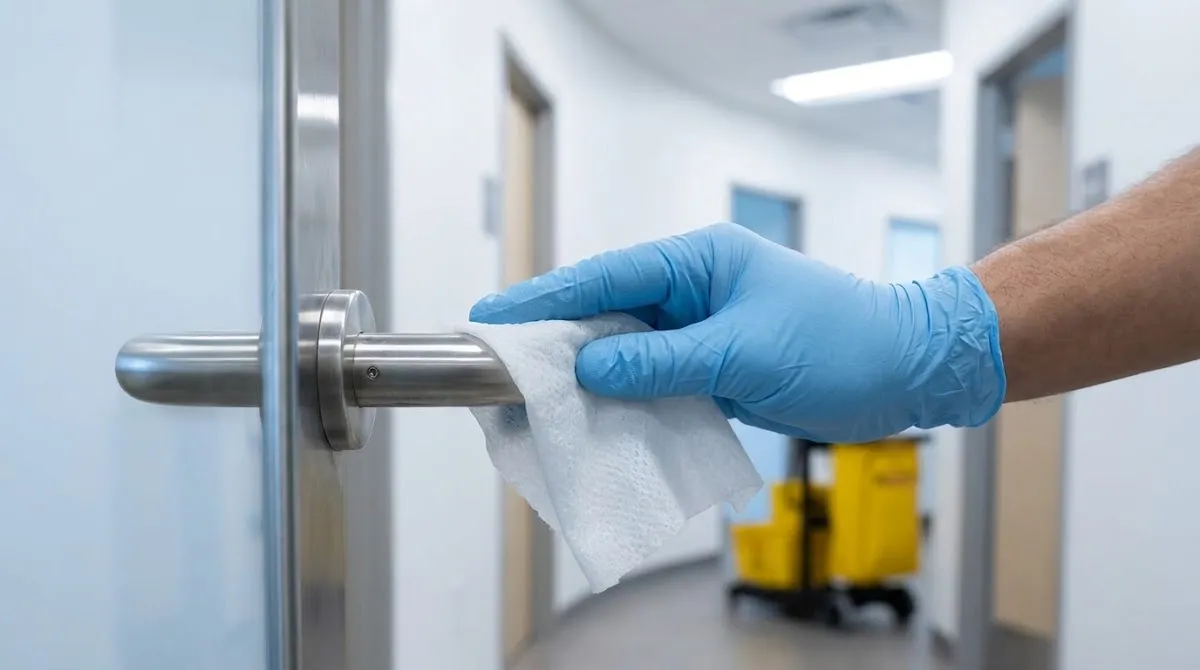
Frequently touched surfaces are the primary pathway for bacteria and virus transmission in medical offices. Federal health guidelines recommend cleaning these surfaces multiple times per day in healthcare settings, not just once during the nightly visit.
Priority surfaces within your office include:
Door handles and push plates throughout the facility
Light switches in every room and hallway
Elevator buttons and accessible door controls
Reception surfaces and sign-in areas
Shared pens, clipboards, and tablets
Exam tables and armrests
Computer input devices at each workstation
Telephone handsets and touchscreens
Bathroom faucet handles and toilet flush levers
Handrails on staircases and ramps
Lobby chair armrests
A day porter service can handle midday contact point cleaning during business hours while your cleaning team covers the full nightly scope.
HIPAA-Compliant Cleaning: What Your Vendor Should Know
HIPAA compliance in medical offices goes beyond digital records. Physical protected health data, like charts on work surfaces, printed schedules, specimen labels, and sign-in sheets, is at risk every time a cleaning crew enters the building.
A cleaning vendor working within your office should follow these HIPAA-aware cleaning procedures:
Complete privacy awareness training before starting work in any healthcare facility
Sign confidentiality agreements and pass background checks
Follow site-specific access rules for keys, badges, alarms, and after-hours entry
Clean around workstations, patient charts, and computer screens without touching or reading documents
Report any exposed PHI (unlocked file drawers, visible patient records, active screens) to the facility contact
Use cleaning logs with date, time, crew member name, area cleaned, and method used
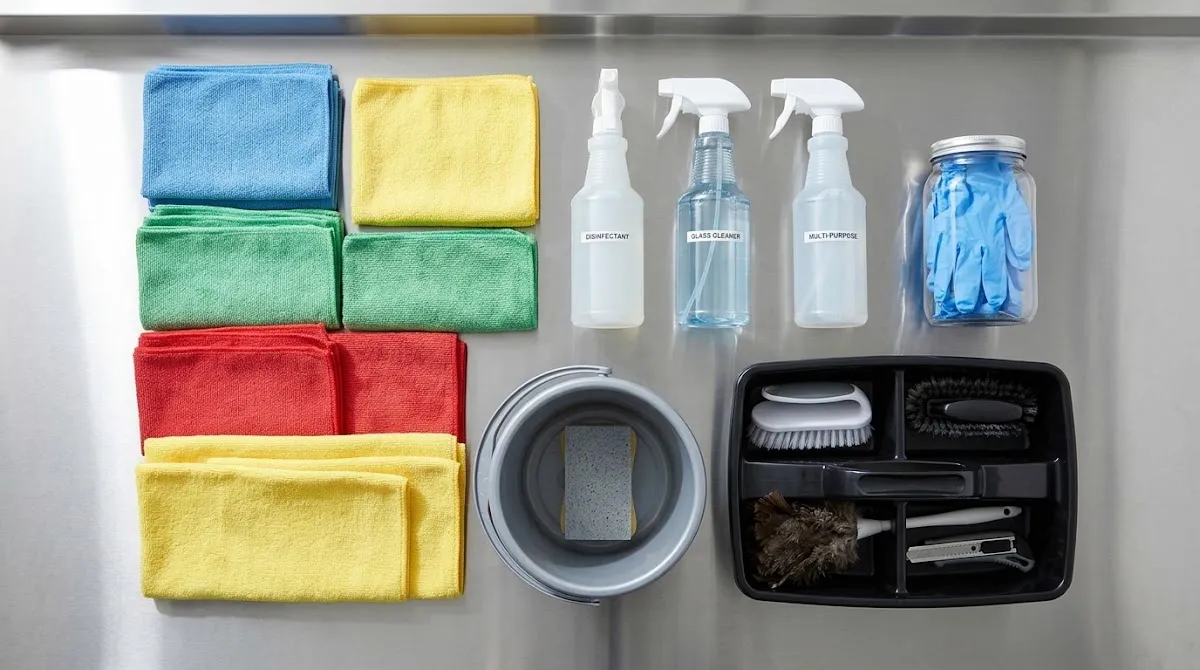
Follow color-coded microfiber cloth systems to stop cross-contamination between rooms
Sequence room cleaning from cleanest to dirtiest areas
For routine clinic cleaning, janitorial vendors are not classified as Business Associates under HIPAA. HHS guidance states that incidental exposure to PHI during standard cleaning does not require a Business Associate Agreement. That changes if the vendor handles document shredding, records disposal, or PHI-containing waste.
Medical offices should also require their cleaning vendor to use EPA-registered disinfectants and follow proper dwell times for every product. Bloodborne safety standards apply to any area where blood or body fluids may be present, including exam rooms, lab areas, and procedure spaces.
Our crews receive HIPAA awareness training, pass background checks, and follow disinfection and electrostatic spraying protocols designed for healthcare environments.
How to Review Your Medical Office Cleaning Program
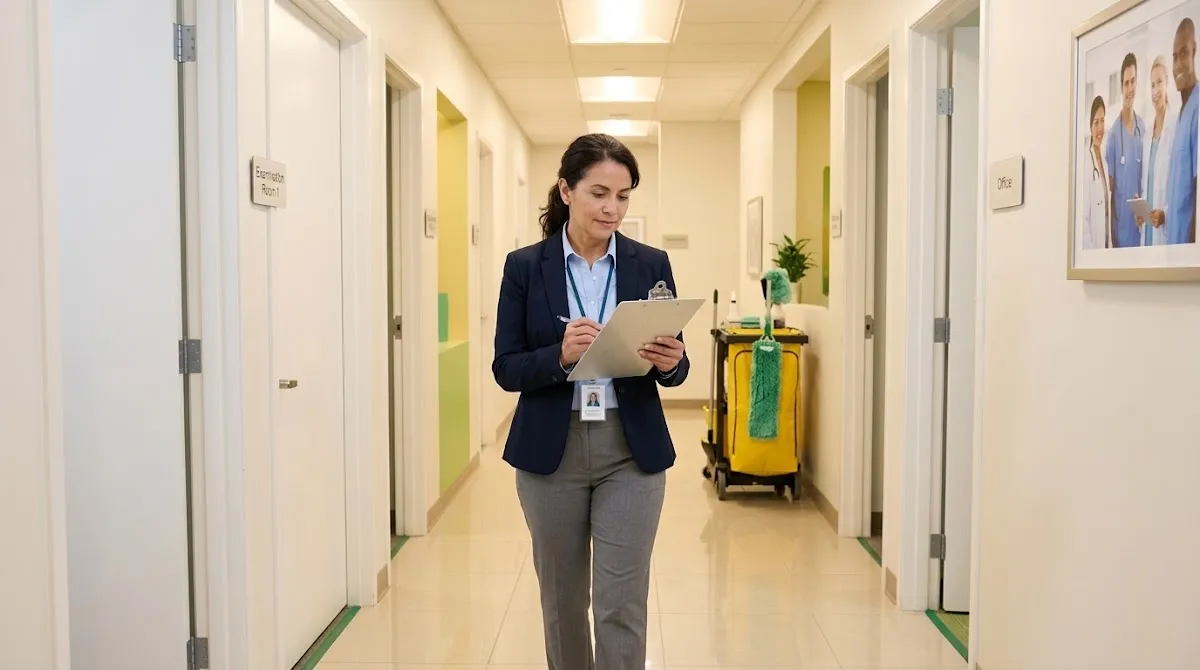
A clean medical office requires more than a comprehensive cleaning checklist on paper. Regular inspections confirm that duties are completed consistently and correctly.
Use this simple review framework:
Walk each zone (lobby, treatment areas, bathrooms, break room, back office) and verify daily items are done
Check cleaning logs for completeness: date, time, crew signatures, and areas cleaned
Confirm that disinfectant products are EPA-registered and within expiration dates
Verify that biohazard waste is separated and disposed of properly
Confirm that high-touch surfaces show no visible residue or buildup
Inspect HVAC ducts and filters for dust accumulation
Ask front desk and clinical team members for feedback on cleanliness
Review vendor training records for HIPAA awareness and bloodborne safety protocols
Medical offices that conduct monthly reviews catch problems before they become compliance violations. A hygienic environment protects your patients, your team members, and your practice.
Medical Office Cleaning Services From ABS
Your medical practice deserves a cleaning partner that understands healthcare, not a general vendor guessing at compliance requirements. ABS provides office cleaning and healthcare facility cleaning across Austin, Houston, San Antonio, Dallas, and Fort Worth.
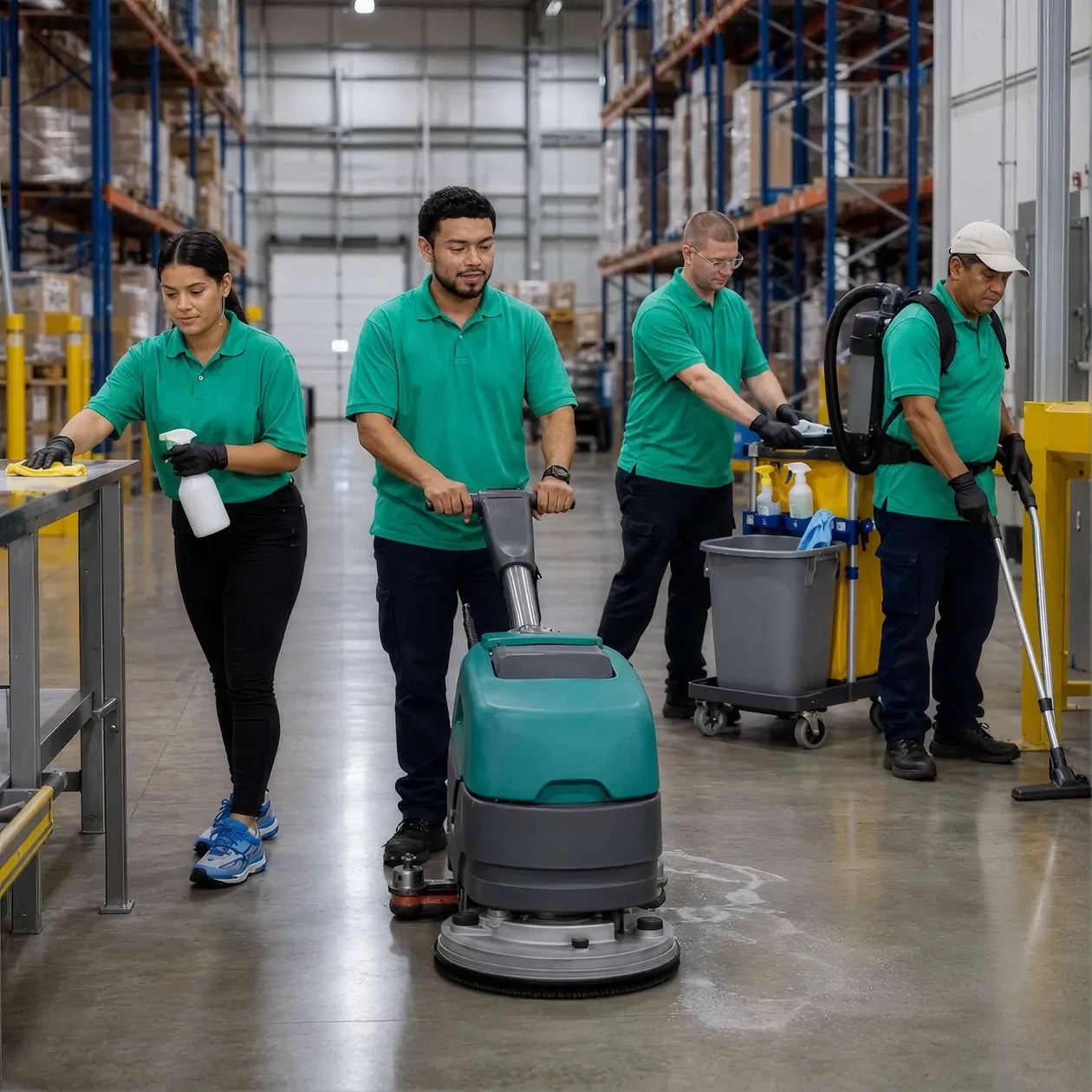
We assign dedicated crews to every facility. Our team members are background-checked, trained in HIPAA-aware medical cleaning protocols, and equipped with EPA-registered products. You get the same trained professionals who know your facility, your schedule, and your sanitation needs.
Every plan is customized to your medical office's size, patient volume, and cleaning frequency. No cookie-cutter programs. Just reliable, consistent cleaning backed by a satisfaction guarantee and a response within 24 hours when you need us.
Call (737) 289-0337 to schedule a walkthrough, or request a free quote online. We'll build a cleaning plan that keeps your facility compliant, clean, and ready for every patient who walks through the door.
Frequently Asked Questions About Medical Office Cleaning Checklists
What are the five steps in a medical cleaning procedure?
Medical cleaning follows five core steps: remove visible debris and trash, apply EPA-registered disinfectant to all surfaces, allow the required dwell time for the product to kill germs, wipe surfaces with a clean cloth using a one-direction motion, and dispose of used supplies according to proper waste handling standards. Each step must be completed in order to prevent the spread of germs between surfaces.
How often should medical offices be cleaned?
Your practice requires daily cleaning of all patient-facing areas, including treatment rooms, lobbies, and bathrooms. Weekly cleaning covers conference rooms, diagnostic equipment, and children's play areas. Monthly cleaning includes floor stripping, window washing, and deep ductwork cleaning. High-touch surfaces should be cleaned multiple times throughout the day, not just during the nightly visit.
What is the difference between sanitizing and disinfecting in a medical office?
Sanitizing reduces bacteria on a surface to a safe level, while disinfecting kills a broader range of organisms including viruses and fungi. Healthcare practices require disinfection, not just sanitation, for treatment areas, bathrooms, and any surface that contacts patients. Federal health agencies recommend EPA-registered products with documented kill claims for healthcare settings.
Does a medical office cleaning company need to be HIPAA-compliant?
A cleaning company working in medical offices should follow HIPAA-aware practices, including privacy training, background checks, and protocols for handling areas where protected health records may be visible. HHS guidance states that routine cleaning vendors are generally not Business Associates under HIPAA. The exception is when a vendor handles document shredding, records handling, or PHI disposal, which does require a Business Associate Agreement.
How do you stop cross-contamination during medical office cleaning?
Professional healthcare cleaning crews stop cross-contamination by using color-coded microfiber systems that assign different colors to different zones (treatment areas, bathrooms, common areas). Crews clean from the cleanest areas to the dirtiest and never reuse wipes between rooms. EPA-registered products with verified dwell times ensure that bacteria are killed before the next surface is cleaned.