
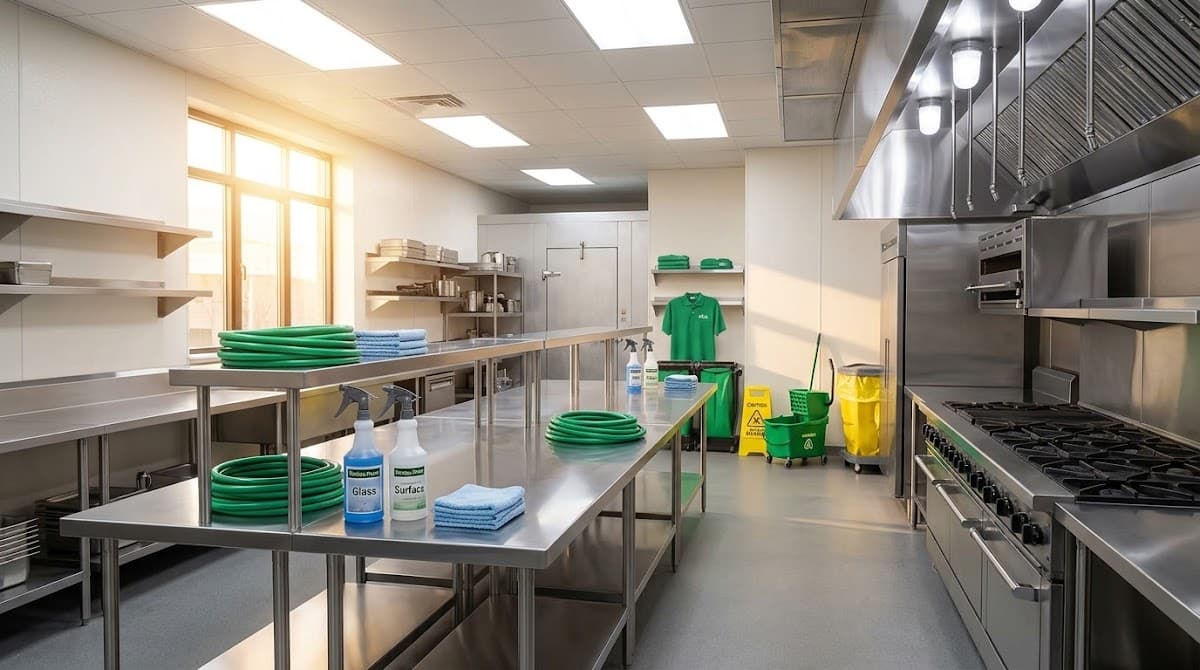
Picture a health inspection auditor walking through your dining room during the Friday dinner rush.
Would every surface, drain, and piece of equipment pass scrutiny right now? For many restaurant owners, the honest answer is "probably not." A structured cleaning program closes that gap between intention and execution.
ABS Commercial Cleaning brings 20+ years of experience and a care-first philosophy to restaurant and food service cleaning.
Key Takeaways
A frequency-based cleaning checklist prevents gaps that lead to health code violations, pest problems, and lost revenue.
Daily tasks build the foundation; weekly and monthly deep cleaning tasks prevent grease buildup and bacterial accumulation.
Cleaning removes visible soil, sanitizing reduces pathogens on food-contact surfaces, and disinfecting targets restrooms and contamination events.
Color-coded tools and zone-based task assignments help prevent cross-contamination between prep areas and service zones.
The CDC reports that norovirus causes about 2,500 outbreaks in the U.S. each year, making rigorous cleaning and sanitation non-negotiable.
Why a Restaurant Cleaning Checklist Matters
Running a clean restaurant takes more than good intentions. A written checklist turns vague expectations into specific, trackable cleaning tasks assigned by shift and zone. Without one, critical steps get skipped during busy service, grease accumulates in hidden spots, and pest activity goes unnoticed until an inspector flags it.
A health inspector may visit one or more times per year, and complaints can trigger additional visits. Violations range from citations and fines to temporary closure. A comprehensive cleaning checklist aligned with the FDA Food Code keeps your entire restaurant inspection-ready every day, not just the day before a scheduled walk-through.
Cleanliness also drives revenue. Guests notice sticky menus, smudged glassware, and dirty restrooms. Those details shape the dining experience far more than most operators realize.
Using a restaurant cleaning checklist helps you keep track of the cleaning tasks that need attention across every shift. Think of it as a list of cleaning duties that ensures your restaurant stays consistent regardless of who is on the clock.
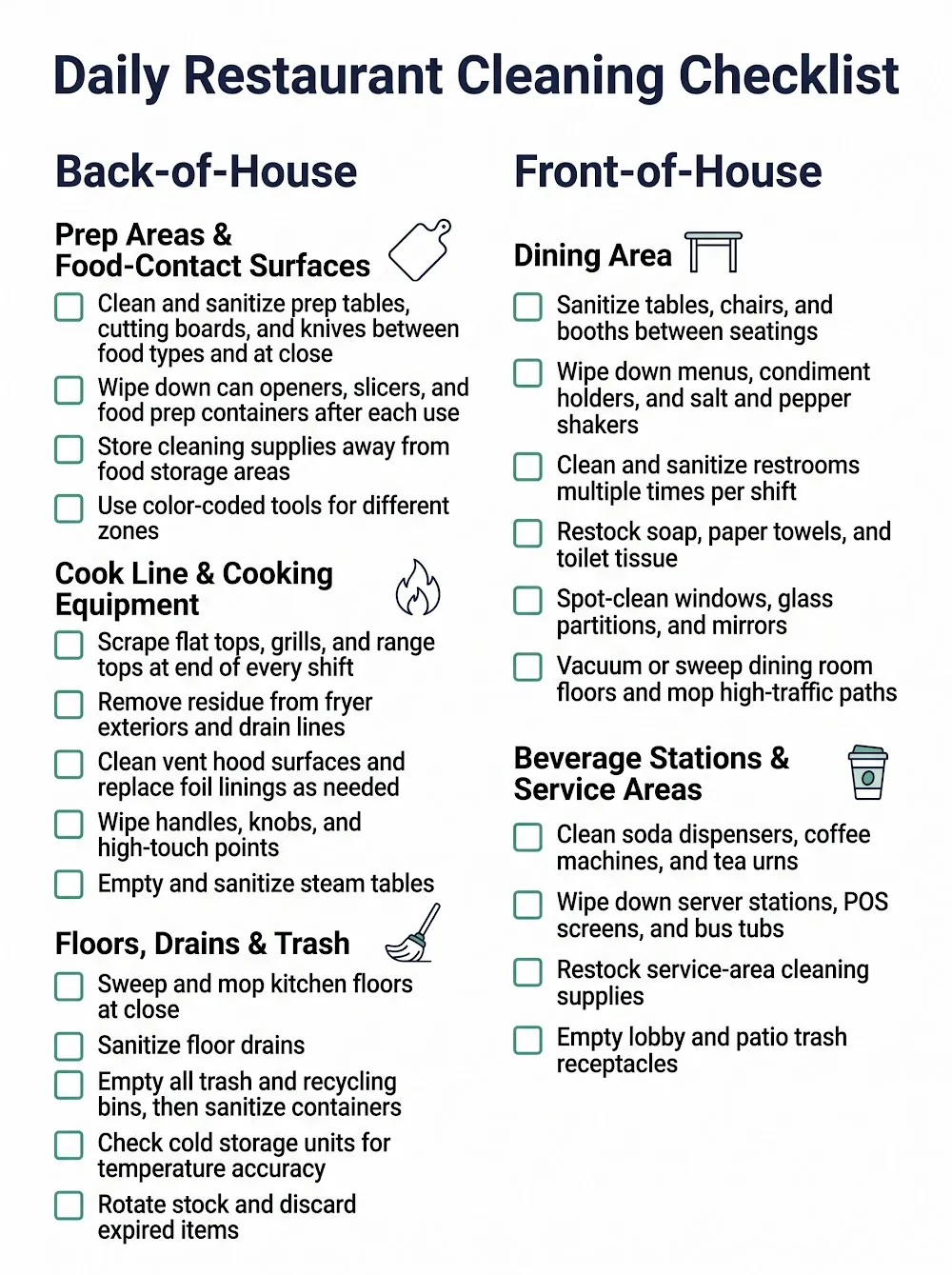
Daily Cleaning Checklists: Back-of-House
Daily cleaning is where sanitation discipline is built or lost. If routines slip, weekly and monthly work becomes expensive catch-up. Below is a back-of-house cleaning checklist organized by zone.
Prep areas and food-contact surfaces
Clean and sanitize prep tables, cutting boards, and knives between food types and again at close. This single habit does more to prevent cross-contamination than almost any other step. Wipe down can openers, slicers, and food prep containers after each use with an approved cleaning solution.
Store cleaning supplies away from food storage areas. Use color-coded tools for different zones so that a cloth used near raw poultry never touches a salad station, reducing the spread of bacteria in a commercial kitchen.
Cook line and cooking equipment
Scrape flat tops, grills, and range tops at the end of every shift. Remove residue from fryer exteriors and drain lines.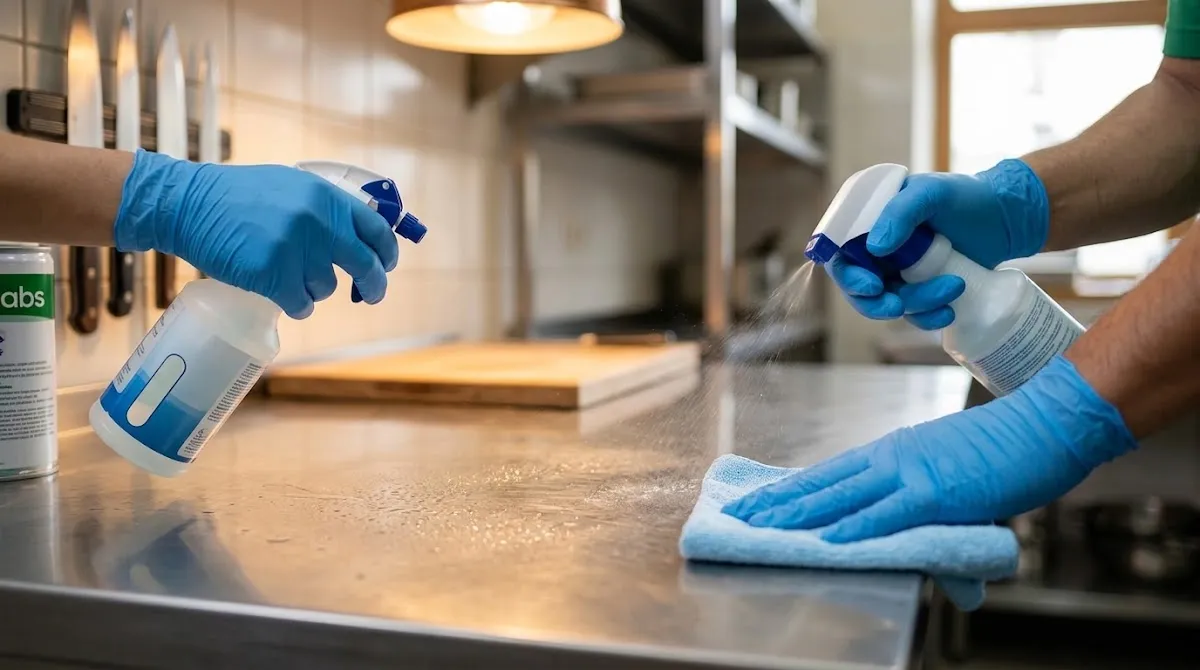
Clean vent hood surfaces and replace foil linings on grills and ranges as needed. Wipe handles, knobs, and other high-touch points that accumulate grime throughout service.
Empty and sanitize steam tables by draining the well, scrubbing with mild detergent, rinsing, and air drying. Keeping this equipment clean extends its lifespan and prevents grease buildup from becoming a fire hazard.
Floors, drains, and trash
Sweep and mop kitchen floors at close, paying extra attention to corners and under equipment. Sanitize floor drains to prevent bacterial growth.
Empty all trash and recycling bins, then sanitize the containers. Clean floors also discourage insect and rodent activity because crumbs and standing water attract unwanted visitors.
Check cold storage units daily for temperature accuracy. Food should be kept below 40 degrees Fahrenheit to limit bacterial growth. Rotate stock and discard expired items.
Daily Cleaning Checklists: Front-of-House
The front-of-house cleaning checklists cover every surface your guests see and touch. These tasks set the tone for the dining experience before anyone takes a bite.
Dining area
Sanitize tables, chairs, and booths between seatings. Wipe down menus, condiment holders, and salt and pepper shakers. Clean and sanitize restrooms multiple times per shift, restocking soap, paper towels, and toilet tissue. Restroom cleanliness ranks among the top factors guests use to judge overall sanitation.
Spot-clean windows, glass partitions, and mirrors. Vacuum or sweep dining room floors and mop high-traffic paths.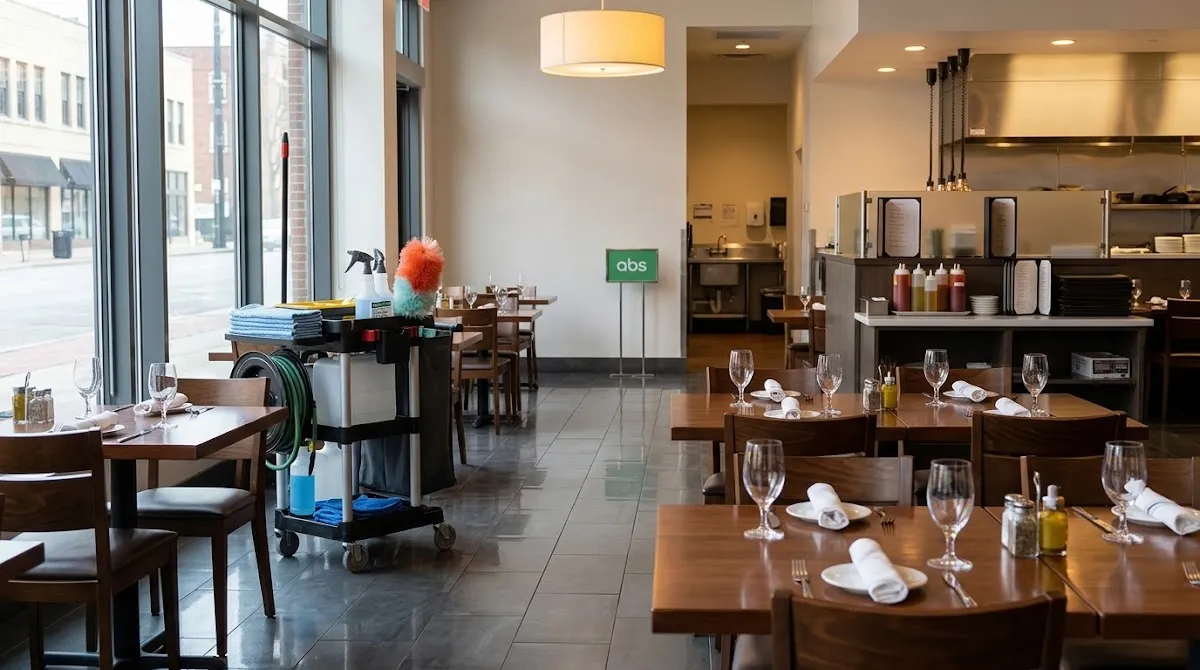
Beverage stations and service areas
Clean soda dispensers, coffee machines, and tea urns daily. These appliances accumulate residue fast and can harbor mold if neglected. Wipe down server stations, POS screens, and bus tubs. Restock service-area cleaning supplies so the opening shift is never scrambling for materials.
Empty lobby and patio trash receptacles before they overflow. Trash areas attract pests quickly, so prompt removal is critical.
Weekly Cleaning Checklists
These weekly tasks target the buildup that daily routines cannot fully address. Assign them to specific days so they do not pile up at the end of the week.
Degrease vent hoods, traps, and exhaust filters. Buildup in these systems is a top fire risk and a common health inspection citation.
Pull appliances away from walls and clean behind and underneath them. This is where crumbs and moisture collect, creating conditions that attract pests.
Descale coffee machines, ice machines, and dishwashers.
Sanitize the interior of reach-in coolers and freezers, removing all items and wiping shelves.
Deep clean fryers by boiling out residue and refilling with fresh oil.
Wash walls, backsplashes, and ceiling tiles in the kitchen area.
Clean and sanitize staff break rooms and lockers.
Detail-clean floors with professional stripping as needed to remove embedded soil and restore slip resistance.
Cleaning checklists organized by week keep your restaurant ahead of problems. This is also the right frequency to create a cleaning schedule that accounts for equipment requiring deeper attention.
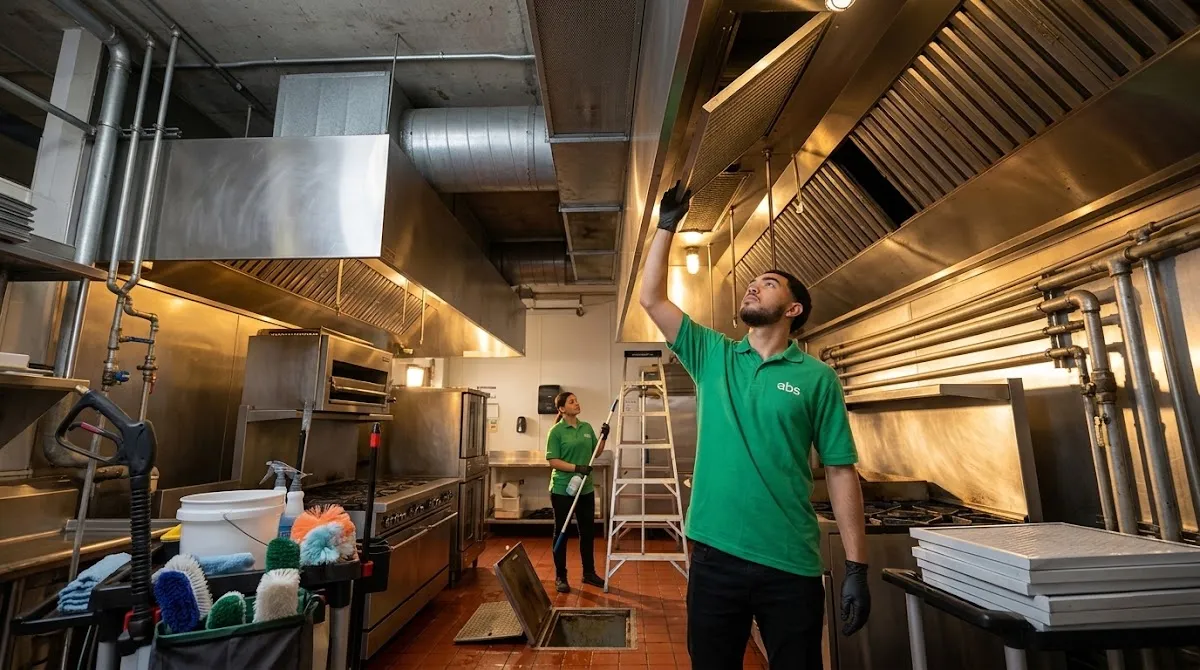
Monthly Cleaning Checklists & Deep Cleaning Tasks
Monthly tasks cover the areas and systems that require deep cleaning beyond what daily and weekly routines address. These often need specialized tools or professional support.
Deep clean walk-in coolers and freezers, including coils, gaskets, and drain pans.
Inspect and clean commercial kitchen equipment such as ovens, steamers, and tilt skillets that may not receive attention on a weekly basis.
Clean light fixtures, ceiling vents, and HVAC returns throughout the entire restaurant.
Arrange professional pest control service. Scheduled pest inspections catch activity early and document due diligence for auditors.
Disinfect high-touch surfaces with electrostatic spraying to reach areas traditional wiping misses.
Audit cleaning supplies inventory and reorder before shortages disrupt the cleaning process.
Review your restaurant kitchen cleaning checklist to reflect any menu, layout, or staffing changes.
Restaurant deep cleaning of dining furniture, upholstery, and carpet refreshes the look and feel of guest-facing spaces.
A monthly cleaning checklist gives management a checkpoint to evaluate cleaning procedures and verify that cleaning checklists for daily and weekly frequencies are actually being followed.
Restaurant Cleaning Best Practices & Tips
Strong cleaning checklists fail without strong execution. These cleaning tips help your team work efficiently and consistently.
Train every team member. Cross-train staff on cleaning and sanitizing procedures, proper chemical dilution, and the difference between cleaning, sanitizing, and disinfecting. Cleaning chemicals used at incorrect concentrations can leave residue or fail to kill pathogens.
Assign zones, not just tasks. Zone-based cleaning assigns ownership of specific areas: prep zones, cook line, cold storage, warewashing, and trash or utility areas. This supports efficient cleaning and eliminates the "I thought someone else did it" problem.
Verify, do not assume. Use sanitizer test strips to confirm chemical concentration. Walk the floor at the end of every shift and compare conditions against your posted checklists. Verification is what separates a cleaning list from an actual cleaning program.
Document everything. Keep signed cleaning checklists on file. Auditors and regulators want to see records, not promises.
Invest in regular cleaning and upgrades. Replace worn mop heads, frayed scrub pads, and cracked cutting boards. If your team needs support with daily porter services to maintain cleanliness between deep cleans, professional help can fill the gap.
Consistent cleaning and sanitizing protocols protect food safety, improve general health and safety for staff and guests alike, and keep the restaurant industry's toughest critics satisfied.
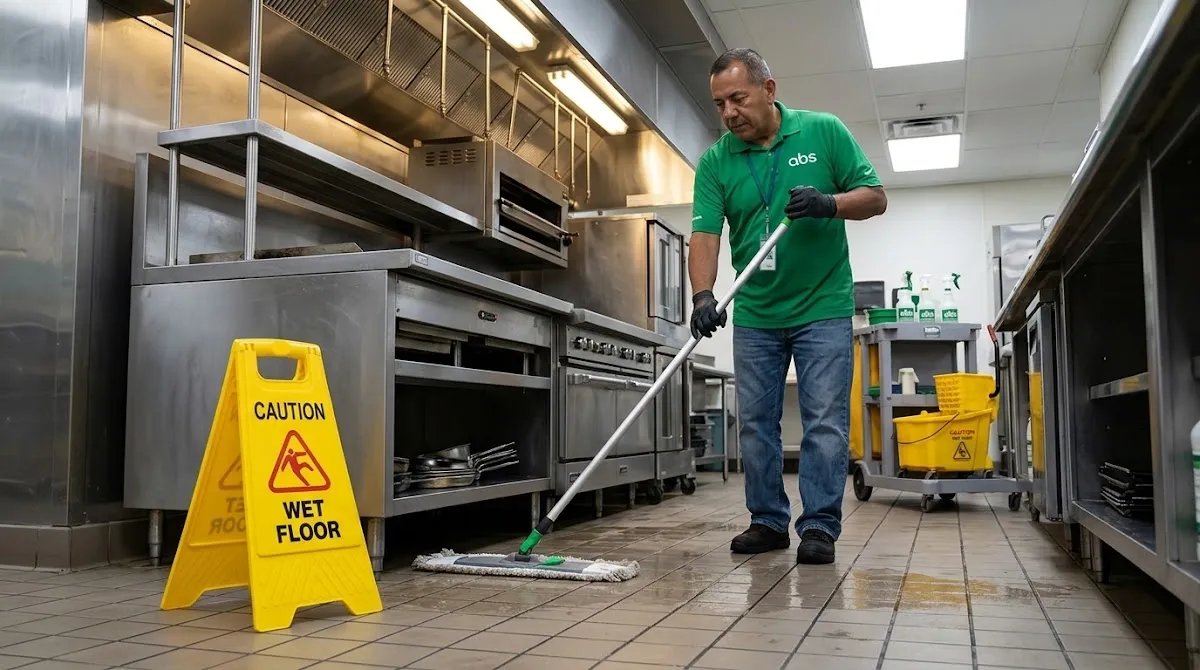
Let ABS Commercial Cleaning Handle the Heavy Lifting
You know what your restaurant needs. We know how to deliver it. ABS Commercial Cleaning provides professional cleaning services and restaurant cleaning services backed by trained, well-compensated teams who treat your space like their own. From nightly kitchen cleaning and sanitizing to monthly deep cleans, we build a customized plan around your operation.
Whether you need help with kitchen or dining area detailing, we bring the cleaning practices and accountability that keep your operation spotless and inspection-ready.
Call (737) 289-0337 or Request a Quote to Schedule Your Service Today!
Frequently Asked Questions About Restaurant Cleaning Checklists
What should be on a cleaning checklist?
A restaurant cleaning checklist should include every surface, piece of equipment, and area that requires attention, organized by frequency. Daily items cover food-contact surfaces, floors, restrooms, and stoves or ranges. Weekly items address traps, vent hoods, and appliance interiors. Monthly items include tasks like HVAC vents, walk-in cooler coils, and pest control inspections.
What is the difference between cleaning, sanitizing, and disinfecting?
Cleaning removes visible dirt and food debris from surfaces. Sanitizing reduces bacteria and other microorganisms on food-contact surfaces to safe levels. Disinfecting uses stronger chemical agents to eliminate a broader range of pathogens on non-food-contact surfaces, such as restroom fixtures and door handles, or during contamination events like norovirus exposure.
How often should a restaurant kitchen be deep cleaned?
Most commercial kitchens benefit from a thorough monthly clean covering vent hoods, walk-in coolers, and ceiling fixtures. High-volume kitchens with heavy output may need to increase that frequency. The foodservice industry generally recommends that areas requiring daily use get daily attention, while less-accessed systems follow a weekly or monthly cycle.
What is the 20/10 rule for cleaning?
The 20/10 rule is a time-management method: clean for 20 minutes, then take a 10-minute break. The principle applies well to restaurant teams tackling large cleaning projects during off-peak hours. Timed intervals keep energy levels steady and prevent rushed or incomplete work.
What is the procedure of cleaning a restaurant?
The standard procedure follows a top-to-bottom, back-to-front sequence. Start with ceilings and vents, move to walls, equipment, and countertops, then finish with floors and drains. Within each zone, clean first to remove soil, then sanitize food-contact surfaces or disinfect restroom areas. Follow a restaurant cleaning schedule to stay organized and ensure no area is overlooked.
What is the 6 10 cleaning rule?
The 6-10 rule refers to a chemical contact-time guideline. Many sanitizing agents require six to 10 seconds of contact with a surface to effectively reduce bacterial counts to safe levels. Always follow the manufacturer's label instructions for exact dwell times, because using a product incorrectly can leave harmful residue or fail to sanitize properly.